Skip to content

LISA and Einstein Telescope Team Up to Catch Cosmic Echoes

Since January 2026, more than forty members of the Einstein Telescope (ET) Collaboration and Laser Interferometer Space Antenna (LISA) Consortium have joined forces in a Synergy project. The aim of this first official shared project is to create a code that both collaborations can use for joint analyses. Because the LISA and the ET will detect different parts of the gravitational-wave spectrum, combining their analyses can give scientists a fuller picture of the signals and their origins, and better test theoretical models.
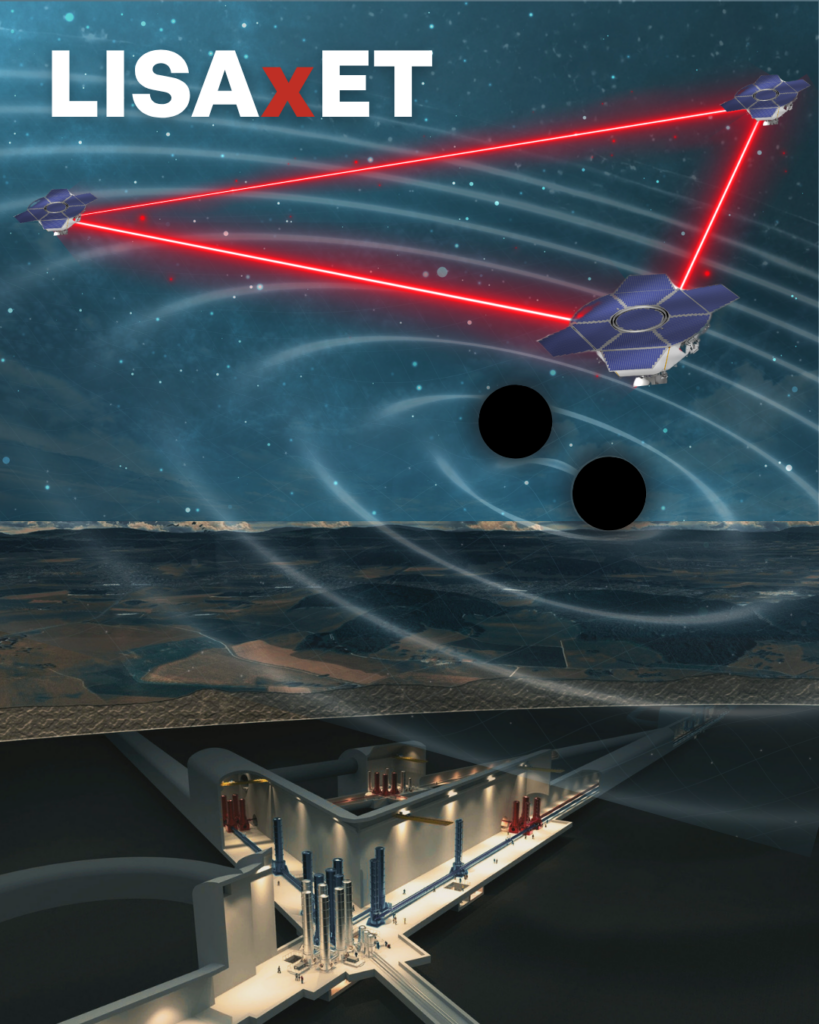
Illustration of LISA space mission with three spacecraft forming a triangle with red laser beams, two black circles representing black holes, and a cross-section of Earth showing underground Einstein Telescope facility.
Image: LISA Consortium/A. Paun; LISA Constellation by ESA, ET by Nikhef.

Searching for new classes of gravitational waves
Since the first detection of gravitational waves (GWs) a decade ago, gravitational-wave searches have become a valuable addition to the cosmological probes we use to study and unveil the mysteries of the universe. The LIGO/Virgo/KAGRA collaborations have already detected hundreds of GWs produced by mergers of compact objects, giving us a better understanding of the population properties of black holes or neutron stars. But a whole different class of signals is still out there, waiting to be detected. Those signals are produced by processes in the early Universe. Due to the weakness of gravitational interactions they travel freely through the cosmos, carrying information about physics that we cannot get in any other way.

These cosmological GW signals are among the main targets that future GW interferometers like the Laser Interferometer Space Antenna (LISA) and the Einstein Telescope (ET) will try to observe. These two detectors probe different frequency bands. LISA in space will cover the millihertz, while ET down here on Earth will cover the range from unity to thousands of hertz.

Different detectors, different frequency bands
Unfortunately, we do not know in advance at which frequency any specific signal will appear. This depends on the process that generated it which can span many orders of magnitude in energy. Roughly speaking, the frequency of a signal today is tied to the energy scale at which it was produced, which is unknown. This means that different frequency bands correspond to different epochs or periods of time. For example, GW associated with asteroid-mass primordial black holes would peak at LISA’s millihertz band, while the ones related to heavier black holes would produce a signal at smaller frequencies. A signal can appear strong in one band and only a bit in another, or be at its strongest somewhere in between where both experiments cannot detect it. In fact, the signals are not expected to completely appear in one detector’s band or in another. They could show up only partially, with the main contribution being outside of the detector range. So, if two (or more) GW detectors look at similar frequencies, their combined efforts could be crucial.
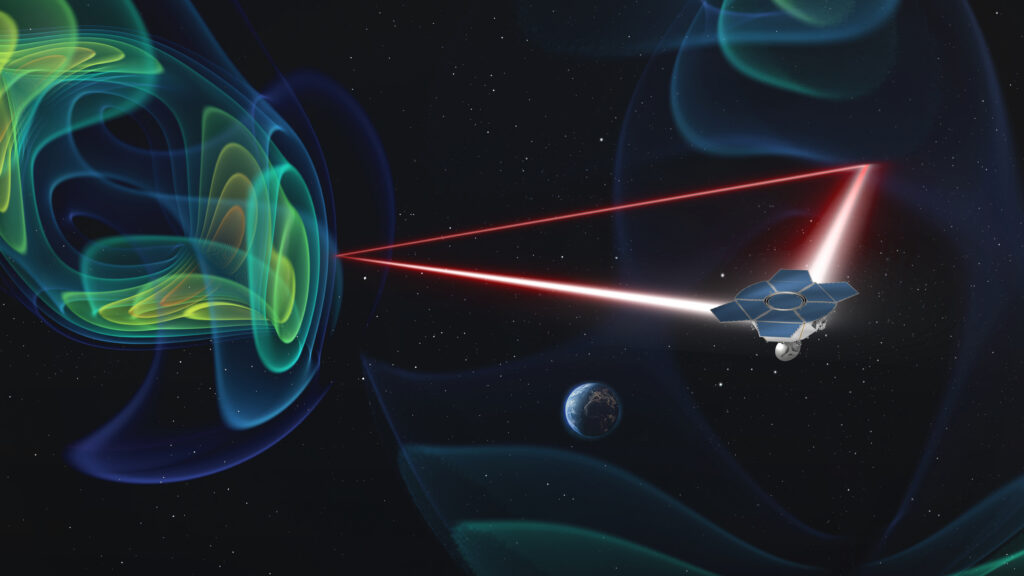
An artist’s impression of LISA. Image courtesy of ESA

This is the main reason for our Synergy project, the first official project between two GW communities (ET and LISA). Combining what different detectors see across the bands should make it easier to work out the shape of the background, separate the cosmological part (coming from the early-Universe) from the astrophysical one (produced more recently by astrophysical sources), and potentially tell apart models that would look basically the same through a single instrument.
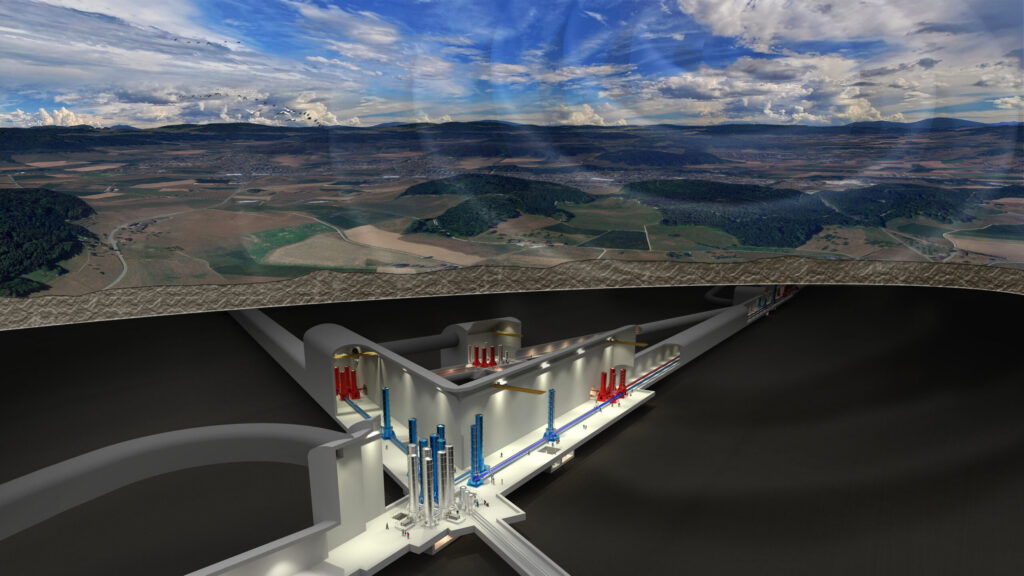
An artist’s impression of ET. Image courtesy of Nikhef

A step towards shared code for gravitational wave detectors
There is also a practical side to this project. LISA and ET already work on overlapping questions, but the analysis codes and conventions have mostly grown up separately. This makes sharing work across the two communities harder than it should be. One of the goals of the project is to overcome this and build something that both sides can use.

The plan is to create a code that the collaborations can use together to perform a joint analysis between GW detectors, and developed to make it easy to add other detectors to the network, including future ones such as Cosmic Explorer in the US. 
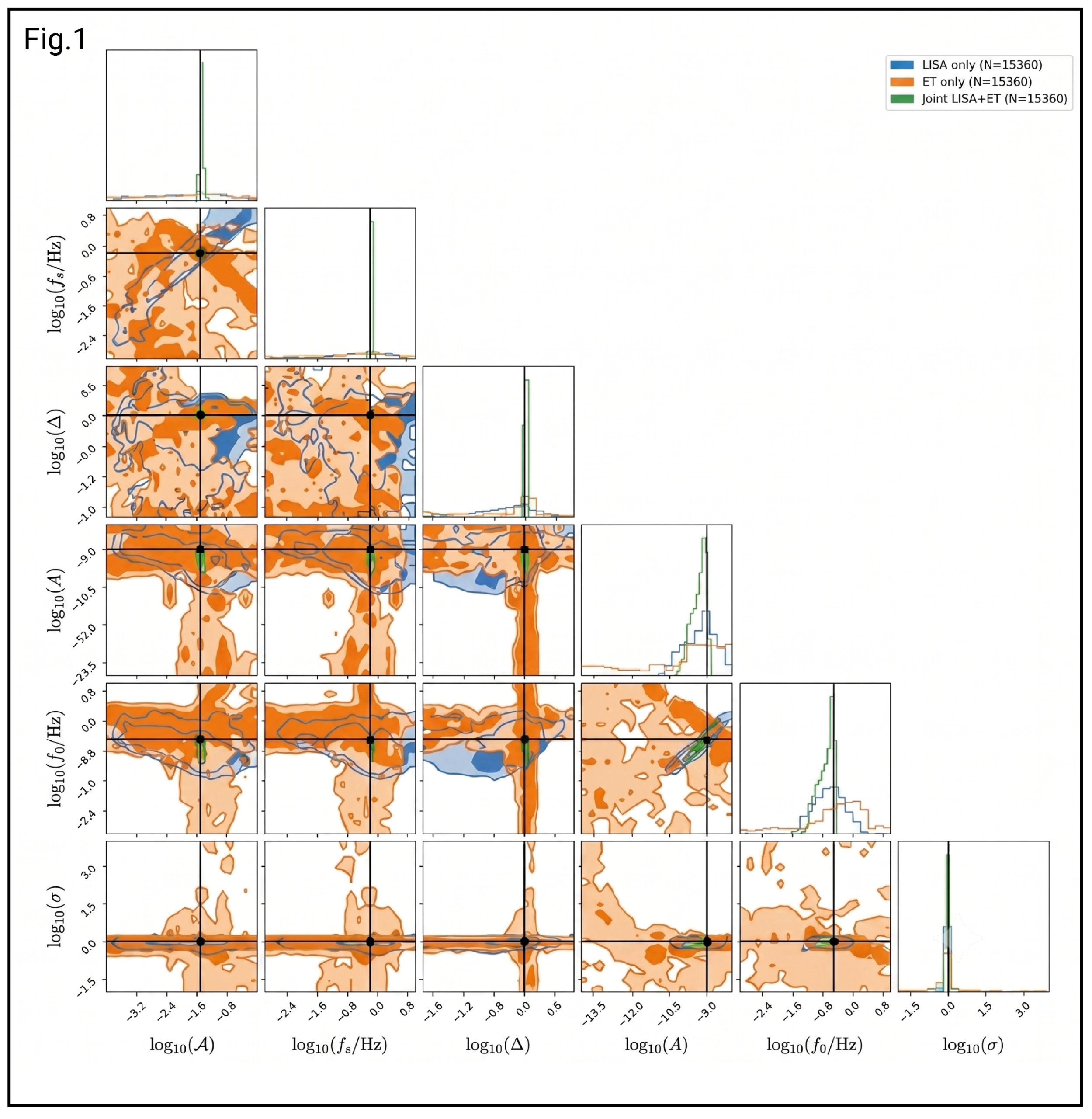
Preliminary tests (Fig.1) already showed the extreme gain in characterising GW signals when LISA and ET are considered together. Figure: LISA-ET Synergy Project
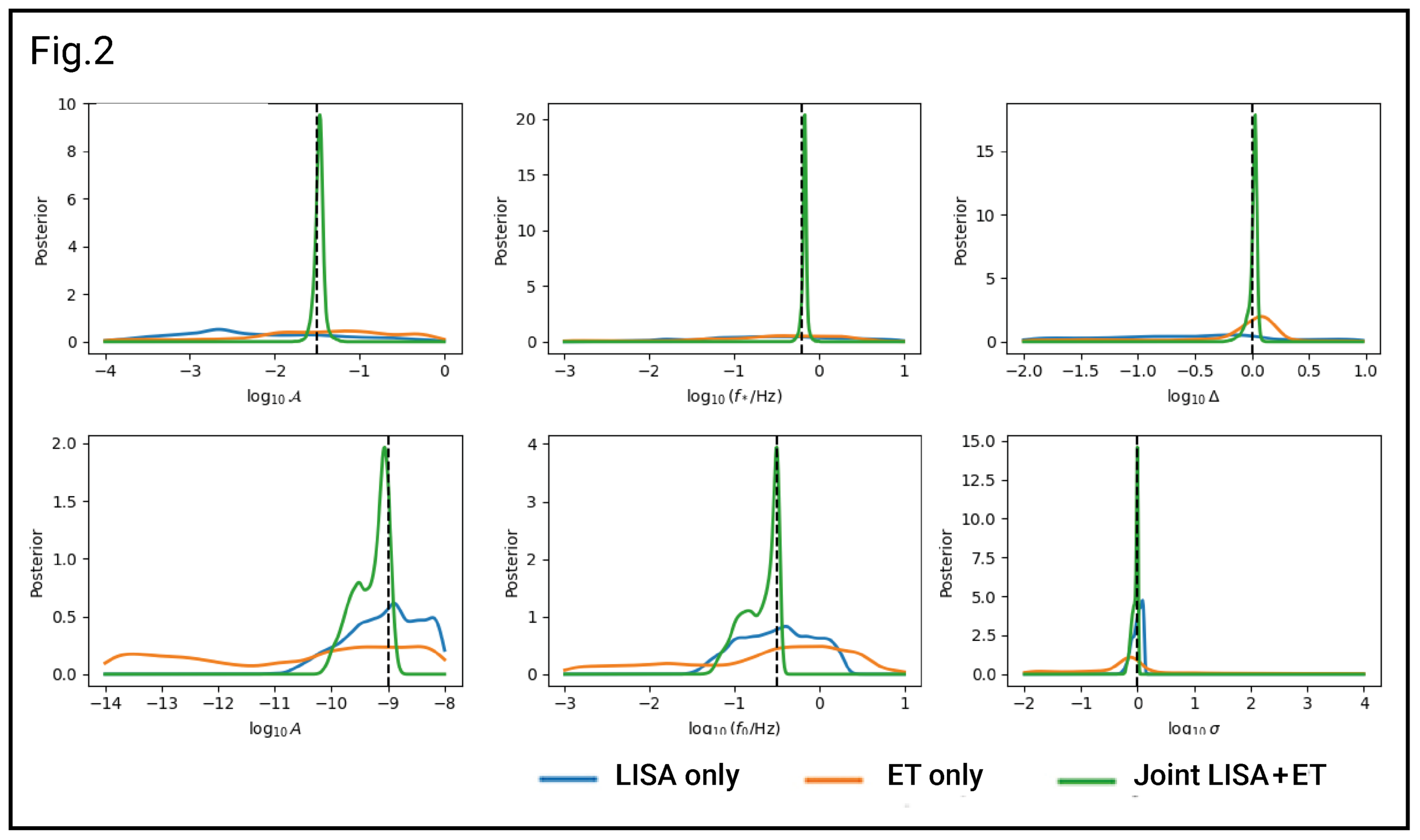
Fig.2 shows updated estimates about specific GW source parameters, obtained by combining prior knowledge with the data from both the detectors. These are so-called joint posteriors (green lines) and are compared here to posteriors from the single detectors (LISA only = blue lines, ET only = orange lines). LISA-ET Synergy Project

The ET-LISA Synergy Project started in January 2026, and has grown into an ambitious global undertaking. The project is coordinated by Antonio J. Iovino (NYU, Abu Dhabi) and Gabriele Perna (KBFI, Tallinn). More than forty people are involved so far from both the ET Collaboration and the LISA Consortium, spanning Europe, the United States, the United Kingdom and Asia and bringing  a mix of different expertise to both the theory and coding elements s of the project. Besides the actual coding work, the other main deliverables that will be produced are two scientific papers: one focuses on different cosmological GW signals and how they look across the bands, and the other introduces the code so the scientific community can easily use it.

Preliminary tests already showed the extreme gain in characterising GW signals when more detectors are considered together and we’re excited to explore the wider cosmological implications!
Antonio J. Iovino and Gabriele Perna, Project Coordinators

The LISA Consortium mourns the passing of Professor Mike Cruise, who has died at the age of 78.

Professor Cruise played a leading role in the development of the Laser Interferometer Space Antenna (LISA) mission and was instrumental in strengthening the United Kingdom’s contribution to this landmark international endeavour. A distinguished scientist devoted to fundamental research, he made significant contributions to gravitational wave science and to the advancement of space instrumentation.
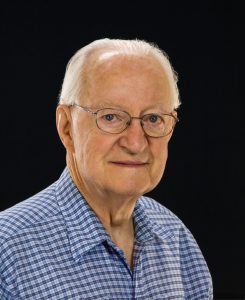
A portrait of Mike Cruise, a British astronomer and astrophysicist who served in various roles at the Royal Astronomical Society, including a 2 year stint as its president.
Foto: Lucinde Douglas Menzies
Licence: CC-BY-4.0

An accomplished educator and advocate of knowledge transfer, Professor Cruise authored the respected textbook The Principles of Space Instrument Design and mentored generations of students and researchers. Even after formally retiring from the University of Birmingham in 2012, he remained actively engaged with ESA, the RAS, the UK Space Agency, and the wider gravitational wave community.

He will be remembered not only for his scientific leadership but also for his kindness, thoughtfulness, and gentle sense of humour.

The LISA Consortium extends its sincere condolences to Professor Cruise’s family, friends, and colleagues. Our thoughts are with them at this difficult time.

NASA, Partners Advance LISA Prototype Hardware

Engineers and scientists at NASA’s Goddard Space Flight Center in Greenbelt, Maryland, completed tests this month on a second early version of a key element of the upcoming LISA (Laser Interferometer Space Antenna) mission.

The LISA mission, a collaboration between ESA (the European Space Agency) and NASA, will use infrared lasers to detect gravitational waves, or ripples in the fabric of space-time. The tests involved the frequency reference system, delivered by BAE Systems, that will help control the lasers connecting LISA’s three spacecraft. The lasers must be finely tuned to make precise measurements — to within a trillionth of a meter, called a picometer.

Spacecraft components configured for testing rest on a table.
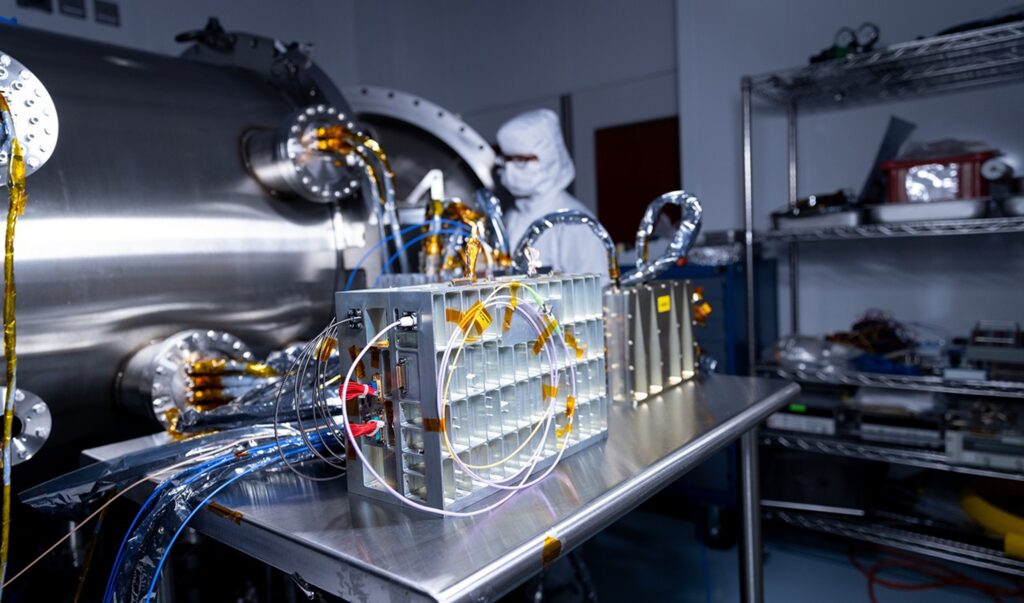
A prototype laser optical module for LISA (Laser Interferometer Space Antenna) rests on a table after testing at NASA’s Goddard Space Flight Center in Greenbelt, Maryland, in May 2025. Xiaozhen Xu, an engineer with Miller Engineering and Research Corp., works in the background. The smaller box to the right is the laser electronics module. Each of the three LISA spacecraft will have a laser system with a frequency reference component and six laser heads. Credit: NASA/Sophia Roberts

Read the full story at

https://science.nasa.gov/missions/lisa/nasa-partners-advance-lisa-prototype-hardware/

10th anniversary of the launch of LISA Pathfinder

[December 3rd 2025] Today, we commemorate the tenth anniversary of the launch of the LISA Pathfinder (LPF) mission. This milestone was a moment of deep pride for the entire LISA Community and the thousands of people who contributed to this extraordinary feat of engineering and science.

LISA Pathfinder was an extremely successful mission that demonstrated our ability to go above and beyond the key technological requirements for the future LISA mission. LPF successfully measured and controlled the motion of the test masses in space with unprecedented precision, effectively removing one of the main technological risks and paving the way for LISA to become reality.

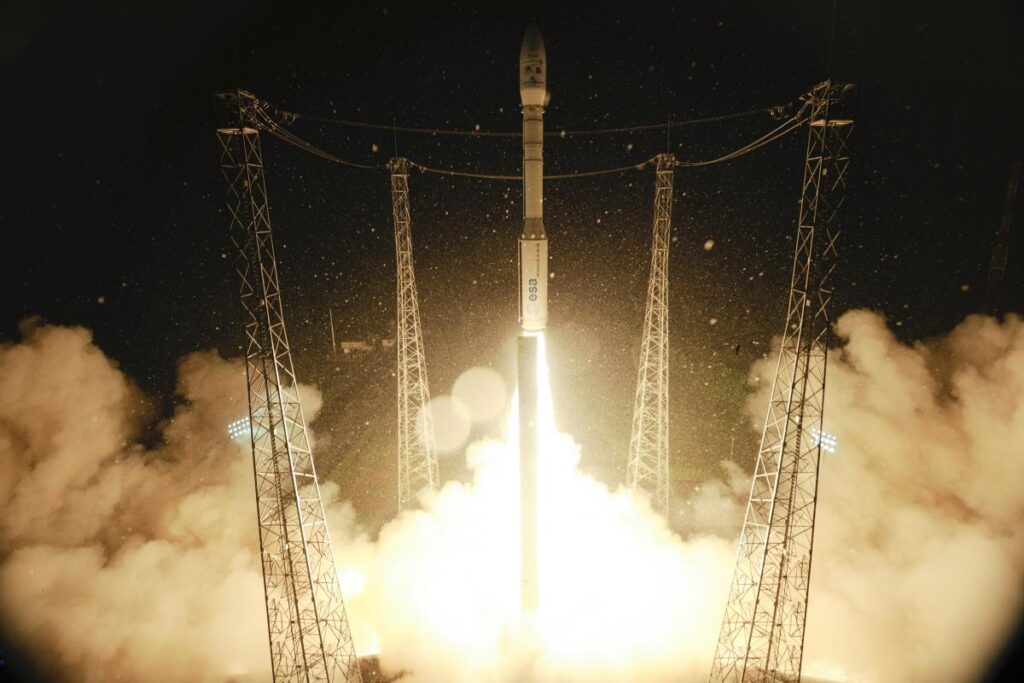
Liftoff of Vega VV06 carrying LISA Pathfinder on 3 December 2015 from Europe’s Spaceport, French Guiana.
Copyright: ESA–Stephane Corvaja, 2015

The success of LPF is a testament to the dedication of its international team. This was a scientifically, technologically, and organizationally demanding project whose success created the essential conditions that now enable us to realize the revolutionary potential of LISA.

We are now half way between the launch of LPF and the nominal launch date of the LISA. Looking to the next decade one of our key responsibilities is to ensure the knowledge and expertise developed through the LPF project are passed on to the next generation of scientists and engineers.

-Prof. Dr. Niels Warburton, University College Dublin and Spokesperson of the LISA Consortium

LISA prime industrial partner selected: Construction of ESA’s ambitious LISA Mission begins

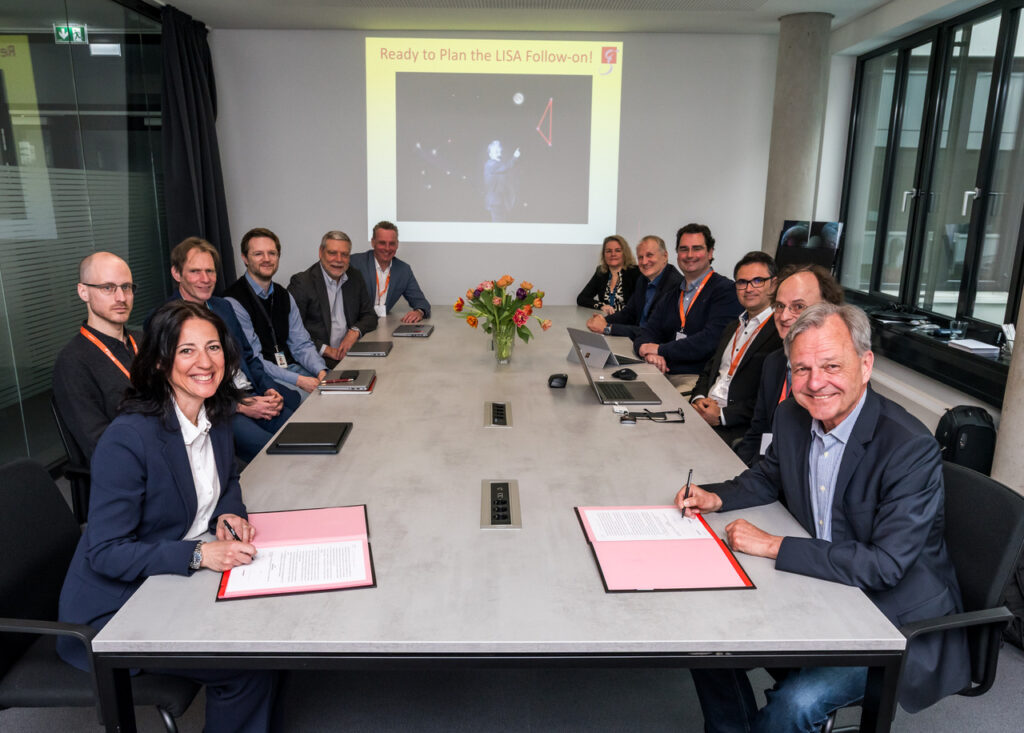
(June 17, 2025) Today, the European Space Agency (ESA) and OHB System AG sealed their agreement to build ESA’s Laser Interferometer Space Antenna, LISA. A bold scientific enterprise, the triple-spacecraft mission will be the first space-based observatory to study gravitational waves: ripples in spacetime caused by the most powerful events in the Universe, such as pairs of supermassive black holes colliding and merging.

“We are delighted that the European Space Agency has now chosen the industrial partner who will take on the manufacturing of LISA, marking another major step towards launch”, says Dr Jonathan Gair, chair of the LISA Consortium council and Group Leader at the Max Planck Institute for Gravitational Physics in Potsdam, Germany. “A decade ago, the success of the LISA Pathfinder Mission (LPF) demonstrated that the ambitious vision behind LISA was feasible. Building on that breakthrough, researchers and engineers have worked tirelessly to refine and develop the full-scale LISA mission”.

“The significance of LISA Pathfinder mission (LPF)”
(c) MildeMarketing

“The scientific and technological development of LISA has largely been completed. We are pleased to now hand over this unique project to OHB for industrial production”, says Karsten Danzmann, director at the Max Planck Institute for Gravitational Physics (Albert Einstein Institute, AEI), and director of the Institute for Gravitational Physics at Leibniz University Hannover. “After most of LISA’s key technologies have already been successfully tested in space with LISA Pathfinder (LPF), the scientific community will continue to support the construction and provide input where needed.” 

The efforts of the LISA Consortium, the scientific community behind LISA that works closely together with the space agencies, culminated in the European Space Agency’s formal adoption of LISA in January 2024, followed by the publication of the LISA Definition Study—the so-called ‘Red Book’—in February. This comprehensive document captures the results of years of dedicated work during the mission’s definition phase.

Now, with LISA on track for launch, our focus shifts to maximizing the scientific return of this pioneering mission, which promises to open an entirely new window onto the gravitational universe.

ESA announcement

Further information

Progress for LISA, the gravitational-wave observatory in space

(17.06.2025) Max Planck Institute for Gravitational Physics (Albert Einstein Institute) and OHB Systems AG have signed a contract for the further development and industrial production of LISA’s key measuring instrument.

To the point:

  • Progress for LISA: The gravitational-wave observatory is an ESA mission with the participation of NASA. It is scheduled for launch in 2035 and will gather entirely new information about the Universe.
  • Key instrument: The phasemeter is the key instrument for LISA’s gravitational-wave observations. It was developed at the Max Planck Institute for Gravitational Physics
  • Contract signed: The Max Planck Institute for Gravitational Physics and OHB Systems AG have signed a contract for the further development and production of the LISA phasemeter.

NASA Reveals Prototype Telescope for Gravitational Wave Observatory

NASA has revealed the first look at a full-scale prototype for six telescopes that will enable, in the next decade, the space-based detection of gravitational waves — ripples in space-time caused by merging black holes and other cosmic sources.
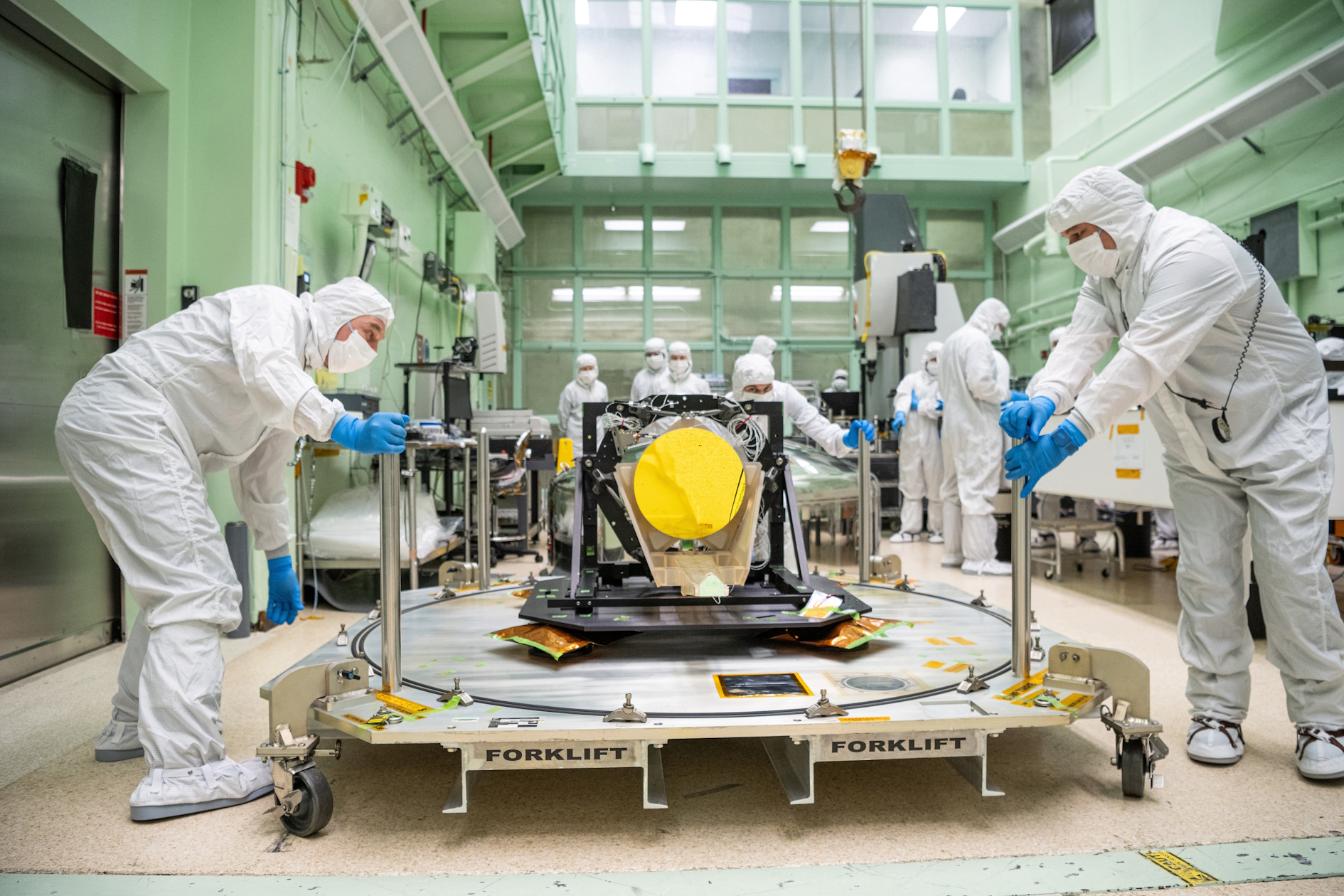
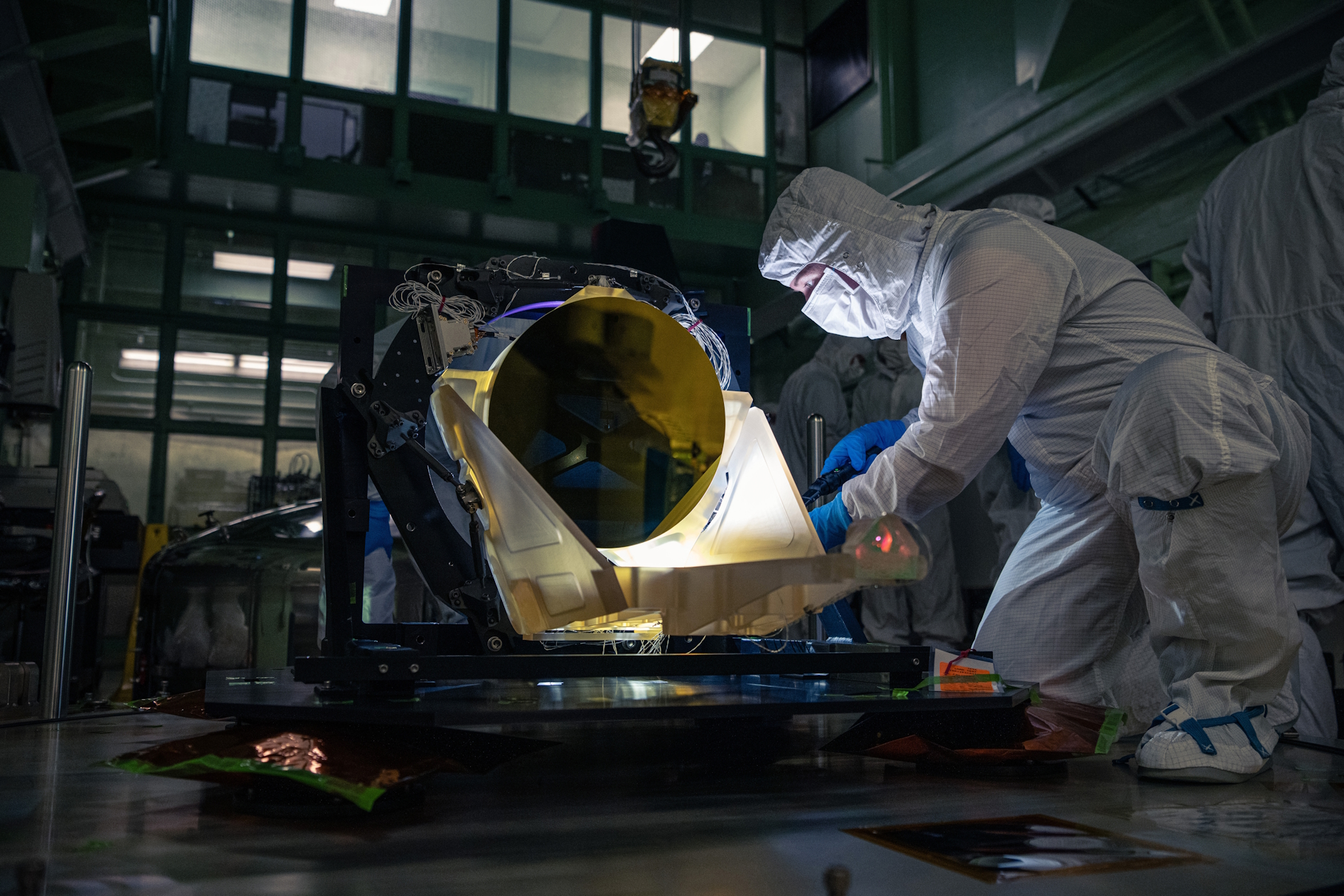
Clean room technicians move a prototype LISA telescope.
On May 20, the full-scale Engineering Development Unit Telescope for the LISA (Laser Interferometer Space Antenna) mission, still in its shipping frame, was moved within a clean room at NASA’s Goddard Space Flight Center in Greenbelt, Maryland. Credit: NASA/Dennis Henry

The LISA (Laser Interferometer Space Antenna) mission is led by ESA (European Space Agency) in partnership with NASA to detect gravitational waves by using lasers to measure precise distances — down to picometers, or trillionths of a meter — between a trio of spacecraft distributed in a vast configuration larger than the Sun. Each side of the triangular array will measure nearly 1.6 million miles, or 2.5 million kilometers.

“Twin telescopes aboard each spacecraft will both transmit and receive infrared laser beams to track their companions, and NASA is supplying all six of them to the LISA mission,” said Ryan DeRosa, a researcher at NASA’s Goddard Space Flight Center in Greenbelt, Maryland. “The prototype, called the Engineering Development Unit Telescope, will guide us as we work toward building the flight hardware.”

A technician inspects a prototype LISA telescope.
The prototype LISA telescope undergoes post-delivery inspection in a darkened NASA Goddard clean room on May 20. The entire telescope is made from an amber-colored glass-ceramic that resists changes in shape over a wide temperature range, and the mirror’s surface is coated in gold. Credit: NASA/Dennis Henry

The Engineering Development Unit Telescope, which was manufactured and assembled by L3Harris Technologies in Rochester, New York, arrived at Goddard in May. The primary mirror is coated in gold to better reflect the infrared lasers and to reduce heat loss from a surface exposed to cold space since the telescope will operate best when close to room temperature.

The prototype is made entirely from an amber-colored glass-ceramic called Zerodur, manufactured by Schott in Mainz, Germany. The material is widely used for telescope mirrors and other applications requiring high precision because its shape changes very little over a wide range of temperatures.

The LISA mission is slated to launch in the mid-2030s.
Download additional images from NASA’s Scientific Visualization Studio

By Francis Reddy
NASA’s Goddard Space Flight Center, Greenbelt, Md.

Media Contact:
Claire Andreoli
301-286-1940
claire.andreoli(at)nasa.gov
NASA’s Goddard Space Flight Center, Greenbelt, Md.

Further Information: https://science.nasa.gov/missions/lisa/nasa-reveals-prototype-telescope-for-gravitational-wave-observatory

ESA: LISA Science Team selected

ESA has announced the members of its LISA Science Team (LST): 18 scientists were elected and appointed for the first term from 2024 to 2027. The role of the LST is to provide scientific advice during the development and operations of the LISA mission. The LST is co-chaired by the ESA and NASA Project Scientists and will support the ESA Project and Operations teams on all aspects related to the science return of the mission.

Find the LST here: https://www.cosmos.esa.int/web/lisa/lisa-science-team

Remembering Astrophysicist Peter Bender

Credit: Steven Burrows, JILA

It is with great sorrow that we have learnt that Pete Bender, at the age of 93, passed away last Saturday, 22 April 2024.

LISA, as we know it today, has for a large part its origin in Pete’s creativity, deep physical insight and intellectual rigor.
It is a small consolation that he could witness the final approval of the mission by the European Space Agency last January.

Pete has been a guide and a model for many of us in the LISA community, and his legacy and example will continue to drive our effort toward the success of the LISA mission.

Read the Obituary on the JILA Website
You could also add something to the Memorial Page