Following the launch of the first LISA Consortium Newsletter, we were very encouraged by the number of new subscribers and by the interest shown across the community.
Thank you to everyone who read, shared, contributed to, and supported this initiative. The newsletter is growing together with the Consortium, and we are motivated to continue building it as a space for information, connection, and community exchange.
In this issue, our Focus Topic, “LISA Community in Motion: Science, Data, and Ideas,” highlights the many ways in which the LISA community is preparing for the mission’s next steps.
You will also find, as usual, news, events, features, publications & PhDs, jobs & opportunities, and the entertaining LISA Comic Strip.
This issue also introduces a new section: Fundamental Questions about LISA. The aim is to answer clear, curious questions about the mission. We hope this section will be useful for students, early-career researchers, and anyone interested in understanding the mission in an accessible way.
As always, this newsletter depends on contributions from the community. You are warmly invited to share news, events, publications, PhD theses, opportunities, images, profiles, questions, and ideas for future issues. You can share news of your papers via #LISAPapers, propose a profile for #HumansOfLISA, or send topic ideas, images, and announcements to the editorial team. You can also help shape future issues: volunteer as a contributor, section editor, or reviewer by emailing us at newsletter-team@lisamission.org.
Looking ahead to the next season of activities across the Consortium, we hope you enjoy reading this issue and discovering the latest developments from our community.
The Editors
UPDATES FROM THE MANAGEMENT TEAM
Preparing for the first release for the simulated LISA datasets
The Management Team (MT) has been working with the Council to pass a motion to prepare for the first release of the simulated LISA datasets and the associated catalogues from the Science Ground Segment (SGS). This Consortium 'Key Project' will direct the Working Groups to focus effort into the creation of analysis pipelines to search for astrophysical, cosmological and beyond GR effects, and carry out population analysis using the SGS catalogues. These projects will result in the first Consortium-wide publications.
LISA Symposia and Consortium Meeting
Although the 2026 Symposium is only just over the MT is working to find a host for the 2028 meeting. If you can't wait that long, we are waiting for you at the LISA Consortium 2027 meeting that will take place in L’Aquila, Italy, from 5–8 July 2027. This will be the first Consortium meeting since the reboot and the plan is to focus the meeting around the Working Group projects.
The first yearly review of the Consortium´s Core Members
Finally, the majority of core members have now gone through their first yearly review. It has mostly gone smoothly and we've learned a lot that we will use to streamline the process for next year. A huge thank you to the membership committee who have worked quickly to resolve any issues as they arose.
Upcoming Onboarding Programme
Now that we've made it through our first year, we understand better what help people need to find their place in such a large Consortium. So, we're excited to launch an onboarding programme -- one that will eventually consist of individual training, mentoring, and networking opportunities, plus more comprehensive orientation materials. We're just getting started and are very open to feedback. Please contact us if you have ideas and/or want to help!
Focus Topic
As LISA moves forward, so does the international community preparing for its science. This issue’s Focus Topic brings together different perspectives on that preparation.
From scientific exchange and community discussions to synthetic data products and new ways of preparing for future LISA signals, these efforts show a community actively preparing for understanding the rich, signal-filled data stream that LISA will deliver.
16th INTERNATIONAL LISA SYMPOSIUM
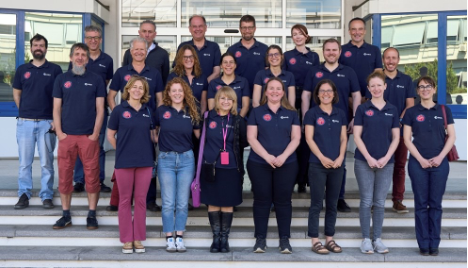
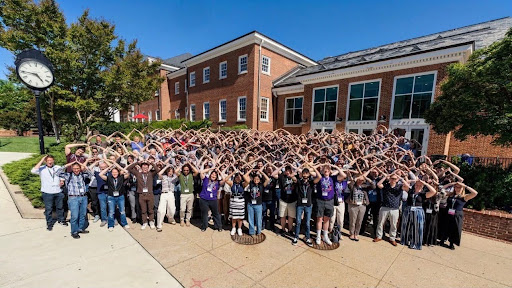
16th International LISA Symposium [Credits: Dennis Henry, Enterprise Owner NASA External Low Data]One of the most important events for the LISA community, the 16th International LISA Symposium, took place from 21–26 June 2026 on the campus of the University of Maryland in College Park, Maryland, USA. As a biennial event, the International LISA Symposium brings together the global scientific community to share mission updates, scientific results, and research related to the mission.
This year’s Symposium, the first major LISA meeting following the Consortium’s restructuring, provided an opportunity to discuss progress on mission development, instrumentation, data analysis, astrophysics, theory, simulations, waveform modelling, cosmology, multi-messenger astronomy, and preparations for the LISA era. The program included invited talks, special sessions, contributed talks, poster presentations, questions, and discussions, bringing together a wide cross-section of the international community, including students and early-career researchers. Scientific sessions were held from Monday to Friday, following the welcome reception on Sunday evening. The week also included a public lecture, a dedicated poster session, and time for local activities on Wednesday afternoon. The Symposium featured contributions from representatives of ESA, NASA, the LISA Consortium, and the LISA Science Team.
To encourage broad participation, plenary talks were streamed through the LISA Consortium YouTube channel, allowing members of the worldwide community to follow the meeting remotely. While the meeting has now ended, registered attendees can still access session recordings: publicly available plenary sessions can be found on the LISA Consortium YouTube channel.
For more from the Symposium, follow the posts and highlights shared on LISA social media through #LISASymposium2026 on Facebook and on Instagram at @lisaconsortium. The full program is available on the LISA Symposium website.
LISA DATA GENERATION
Preparing for the Common Datasets
LISA data analysis will bring unprecedented challenges. Unlike current ground-based gravitational-wave observations, LISA is expected to observe a rich, signal-dominated data stream, where thousands of strong gravitational-wave sources will overlap with fainter signals from many more foreground and background emitters.
Preparing for this future requires more than theoretical models alone: the community needs realistic synthetic data with which to develop, test, and compare analysis methods before the mission begins operations.
This is the goal of the Distributed Data Processing Centre (DDPC) Simulated Data Generation effort. Starting from synthetic source catalogues and waveform models, the gravitational-wave emission from diverse populations of sources is simulated, combined with a model of the LISA detector response and relevant instrumental noise processes, and processed into synthetic data products designed to resemble future LISA observations as closely as possible. These datasets provide an essential testing ground for the data analysis pipelines and system components that will be needed once real LISA data become available.
At the 2026 LISA Symposium, Jonathan Menu, the leader of the DDPC Simulation Coordinating Unit (CU SIM), presented the status of this work in his contribution, “Towards realistic LISA data cocktails: simulated data generation for Mojito.”.
He described Common Dataset 1, known as Mojito, as an initial dataset series for testing LISA analysis pipelines. The dataset comes in two variants: a “Light” version with a limited number of gravitational-wave sources and simple instrumental noise, and a “Heavy” version with more sources and more complex, time-varying noises.
Mojito Light was generated with significant contribution from the Finland Data Computing Centre (DCC) and had an internal release, to the DDPC, the NASA Science Ground Segment (NSGS) and, more generally, the full Science Ground Segment in December 2025. At the moment, DDPC and NSGS are analyzing the datasets with early versions of their Global Fits.
Mojito Light dataset should be publicly released and accessible to the whole community by the end of 2026.
Mojito Heavy is planned for an internal release in June 2027. The public release of the Mojito Heavy dataset should be in 2028.
Together, these datasets provide increasingly realistic test cases for exploring source separation and characterization strategies, and preparing for the complexity of future LISA science. In this sense, the Common Datasets are not only technical products, but also shared community resources: they help turn LISA’s scientific promise into something that can already be studied, tested, and experienced.
TUNE INTO SPACETIME
Listen to the gravitational waves LISA is built to detect
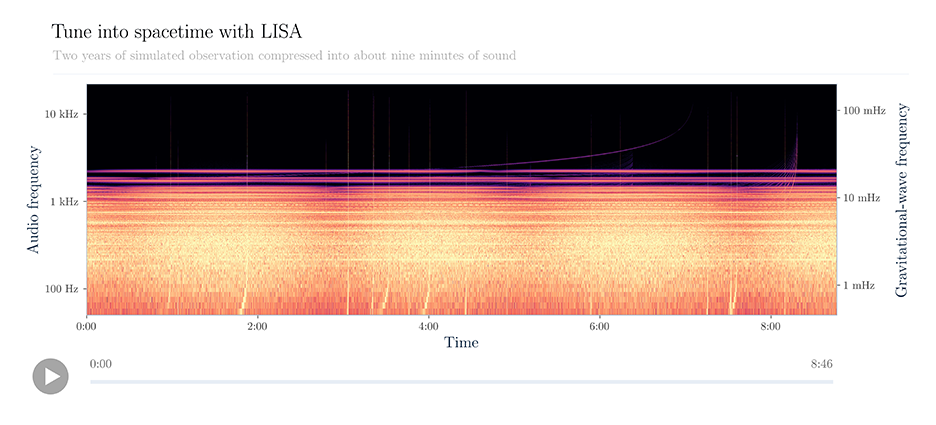
Tune Into spacetime with LISA: Two years of simulated observation compressed into about nine minutes of sound. [CREDITS: Data: simulated LISA DDPC common dataset ‘Mojito Light’; Sonification pipeline: Olaf Hartwig, Alex Deich; Image: Nina Kunert]
Gravitational waves are ripples in spacetime, but what if you could hear them?
The LISA Communication Working Group is excited to announce a new project dedicated to the sonification of LISA data: turning the many gravitational-wave sources LISA is expected to detect into sound we can listen to.
Our starting point is the simulated Mojito Light dataset, the first mock signals we are turning into sound and only the beginning. Our goal is to make sonification a lasting part of LISA’s communication efforts, revisiting past simulated signals to render them audible and sonifying new datasets as the mission advances toward flight.
We are now preparing a dedicated space on the lisamission.org website for the sonified data, where you will soon be able to listen for yourself. In the meantime, if you would like to contribute ideas or expertise, or simply want to follow along, get in touch with the sonification team via: comm-wg-sonification@lisamission.org. Stay tuned to hear the gravitational wave Universe LISA will one day reveal!
LISA MONDAY CALLS
As the LISA community continues to grow and move forward through shared science, data, and ideas, the LISA Monday Calls provide a regular space for Consortium members to stay connected and exchange updates.
These regular weekly Consortium calls are dedicated to scientific exchange within the LISA community. Each call typically features two talks, offering members the opportunity to present ongoing work, hear about current LISA-related research, and follow developments across the Consortium.
The calls take place on Mondays at 17:00 CEST / 15:00 UTC / 11:00 EDT / 8:00 PDT, except on holidays. Information about previous, current, and future talks is available on theLISA Monday Calls wiki page, which is accessible only to LISA Consortium members using LISA Directory credentials.
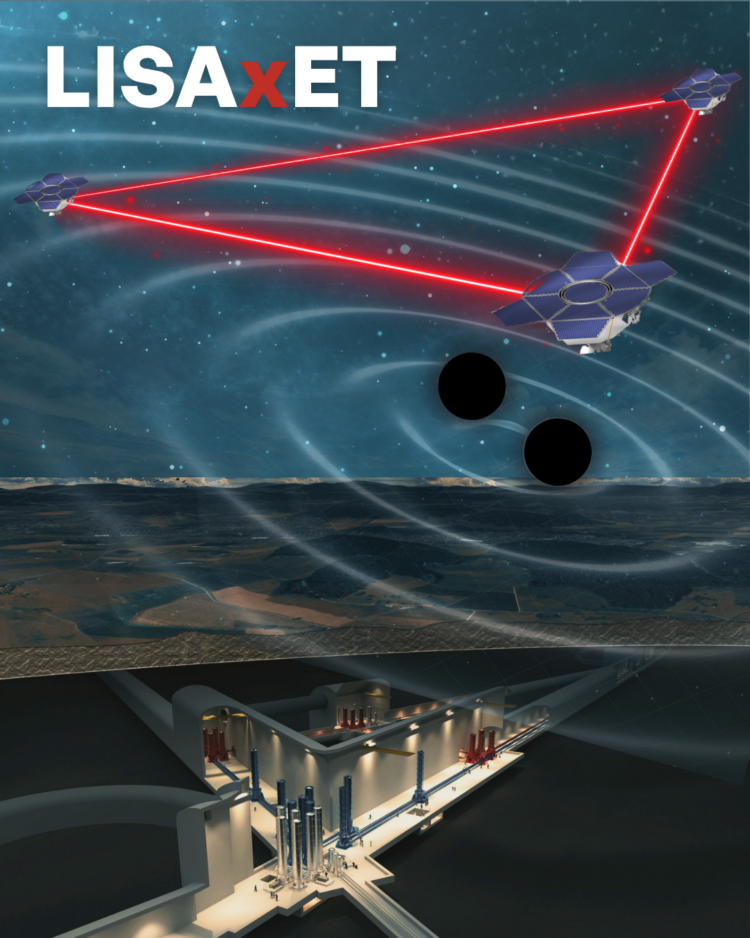
UNVEILING THE UNIVERSE TOGETHER: LISA AND EINSTEIN TELESCOPE SYNERGY PROJECT
[Credits: LISA Consortium/A. Paun; LISA Constellation by ESA, ET by Nikhef]
Beyond the black hole mergers already detected by LIGO/Virgo/KAGRA lies an untapped class of gravitational-wave signals: echoes from the early Universe that could reveal physics unreachable by any other method. The challenge is that it is impossible to predict in advance which frequency band a specific signal will occupy, and signals could show up only partially in any single detector.
This is the motivation behind the new ET-LISA Synergy Project, the first official collaboration between the space-based LISA and ground-based Einstein Telescope communities. The project is coordinated by Antonio J. Iovino (NYU, Abu Dhabi) and Gabriele Perna (KBFI, Tallinn).
Since launching in January, over 40 researchers have been building shared analysis tools. The plan is to create a code that both collaborations can use together to perform a joint analysis. They will also work on two collaborative papers, one focusing on different cosmological GW signals and how they look across the bands, and the other introducing the code so the scientific community can easily use it.
Early results already show that combining detectors dramatically improves signal detection, setting the stage for major cosmological discoveries ahead.
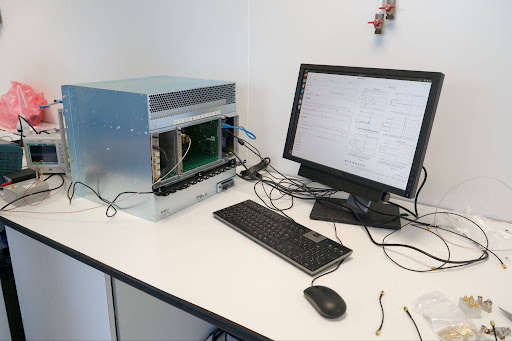
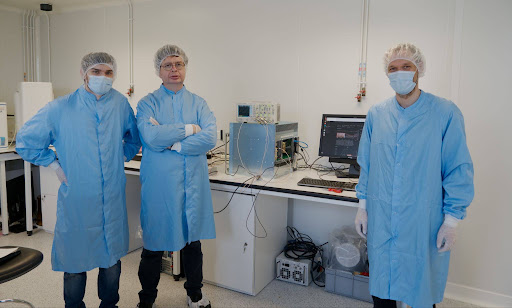
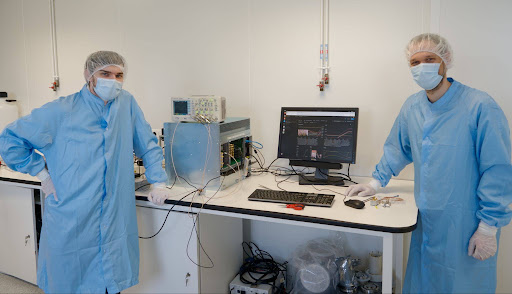
First LISA Ground Support Equipment Phasemeter Delivered to APC in Paris
The University of Hamburg delivered its first LISA ground-support equipment (GSE) phasemeter (PMS) prototype to APC in Paris. The GSE-PMS is developed in Germany by the University in collaboration with the Deutsches Elektronen-Synchrotron (DESY) in Hamburg and is based on the MicroTCA.4 hardware architecture, developed originally for realizing e.g. precise phase readout of radio frequency signals in accelerators.
The GSE-PMS development is funded by the German Aerospace Agency DLR (Grant reference 50OQ2302) and is coordinated closely with the development of the flight phasemeter.
This phasemeter, optimized for flexibility and usage in labs, will be adapted by French colleagues to control a beam alignment mechanism in an optical GSE developed in France.
Next year, the phasemeter prototype will be completed with additional readout channels and will be sent to CNES to be used in the end-to-end interferometer test campaign. GSE-PMS systems are also to be delivered to UKATC Edinburgh, UK and the AEI in Hannover, Germany for optical bench testing and phasemeter verification, respectively.
As part of the delivery the device underwent a rigorous quality assurance process, with all core components performing as expected. The on-site integration and setup of the remote-control GUI ensured operational readiness and provided valuable feedback to further refine the system and its documentation.
[Photos courtesy of Christian Darsow-Fromm/U. Hamburg]
AEI plays a leading role in the development of LISA’s key instruments
The AEI receives a grant totaling 35 million euros from the DLR to develop key components of the instruments for the satellite mission.
To the point:
Preparations for LISA: LISA is a space-based observatory for gravitational waves and a mission of the European Space Agency (ESA) with contributions from NASA. It is scheduled to launch into space in the 2030s and will gather entirely new information about the Universe. The satellites and their high-precision measurement instruments are currently being developed.
Scientific expertise: The AEI is receiving a grant from the DLR. Under this grant, the institute is entrusted with leading the development of key LISA instruments as well as the investigation and verification of additional components through 2030. The grant totals 35 million euros.
Next steps for the phasemeter: On behalf of and under the leadership of the AEI, OHB Systems AG will develop and manufacture the engineering models, qualification models, and flight hardware for one component of the phasemeter. The phasemeter is LISA’s central measuring instrument.
Further information, images and contact: [aei.mpg.de].
Consortium News
Publication and Presentation Committee Ratified
The LISA Consortium Publication and Presentation Committee has been officially ratified by the LISA Council. The Committee will organise the distribution and review of publications within the Consortium and will play an important role in supporting scientific communication and publication processes.
Committee members are:
Riccardo Buscicchio
Camilla Danielski
Valerio Ferroni
Rubina Kotak
The Consortium thanks the new members for their willingness to get involved in the P&P Committee and wishes them success in their new roles.
New LISA Bylaws Committee Announced
The Appointments and Elections Committee has announced the members of the new LISA Bylaws Committee:
Fabio Antonini
Poshak Gandhi
Samaya Nissanke
Thomas Sotiriou
Jonathan Thompson
The Bylaws Committee is responsible for the oversight and review of the Consortium Bylaws and serves as an important part of the Consortium's governance structure.
The Consortium thanks the new members for their willingness to get involved in the LISA Bylaws Committee and wishes them success in their new roles.
New Chairs Elected for the LISA Early Career Scientists Working Group
The LISA Early Career Scientists Working Group (LECS) has officially elected its new Chairs. As is customary, the group is represented by four Chairs: two early career researchers currently pursuing their PhDs and two researchers who have already obtained their doctoral degrees.
The newly elected Chairs, listed alphabetically, are Hannah Dykaar, Saptarshi Ghosh, Claire Rigouzzo, and Michael Rizzo-Lopez.
The outgoing Chairs, Deborah Ferguson, Nils Albin Nilsson, and Florentina Pislan, have done an excellent job fostering a supportive and active LECS community. Their service and commitment to the LISA community over the past two and a half years are deeply appreciated.
2027 LISA Consortium Meeting
The LISA Consortium 2027 meeting will take place in L’Aquila, Italy, from 5–8 July 2027.
The meeting will provide the first opportunity since the Consortium reboot for members to gather, exchange ideas, and discuss future activities. Additional information will be shared in the coming months, but participants are encouraged to reserve the dates in their calendars.
The Consortium Management Team thanks Riccardo Buscicchio, Manuel Arca Sedda, Andrea Marselli, and their team for submitting the successful proposal. The Team also thanks all groups that expressed interest in hosting the 2027 meeting.
Call for Proposals: 17th International LISA Symposium
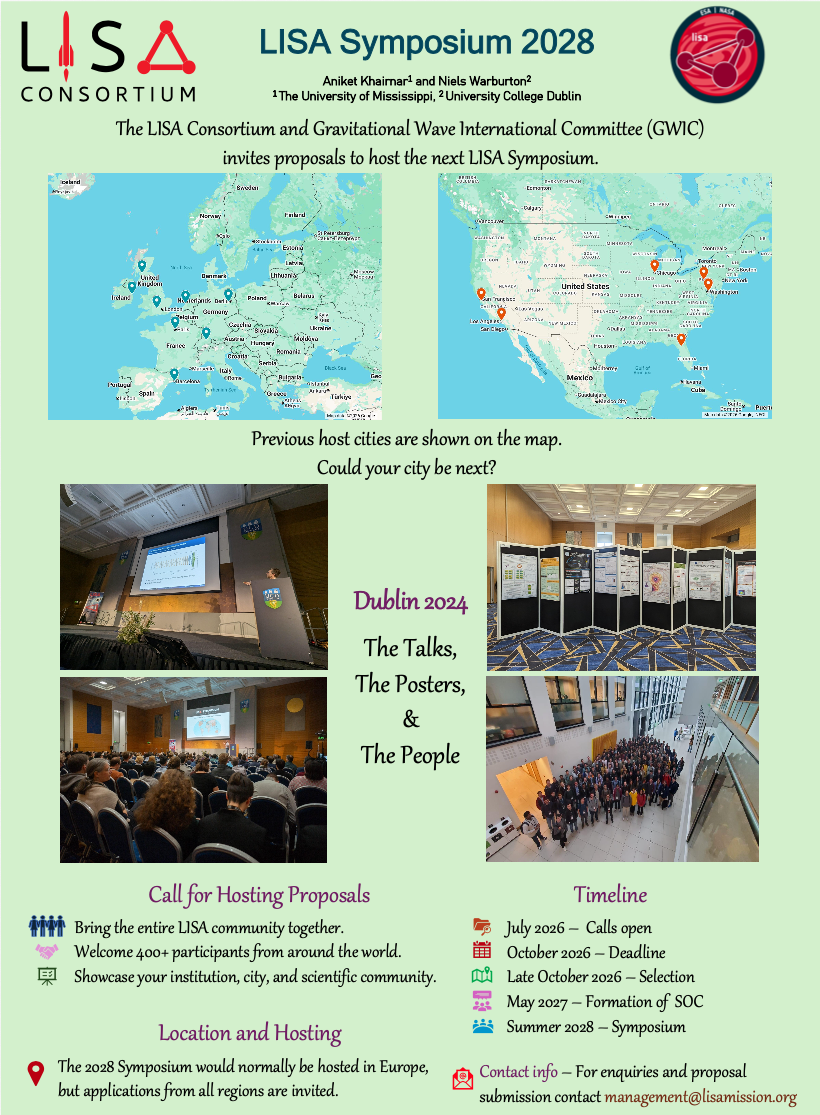
Looking ahead to 2028, the LISA Consortium Management Team and the Gravitational Wave International Committee (GWIC) have invited proposals to host the next International LISA Symposium.
The symposium will continue the tradition of bringing together researchers and engineers from the LISA Project, the LISA Consortium, and the broader scientific community.
Proposals are expected to include information on venue options, participant costs, remote attendance possibilities, and the composition of the Local Organising Committee.
Proposals for hosting the 2028 meeting will be accepted starting in July 2026 and should be submitted to the LISA Consortium Management Team no later than the beginning of October 2026.
The venue is expected to be selected in late October 2026 and the Scientific Organizing Committee formed in May 2027.
ESA & NASA News
LISA Science Team Updates
[Credits: LISA Science Team]
The LISA Science Team (LST), a team of European and American experts working with ESA and NASA to provide scientific guidance to the mission, has established Working Groups to address specific aspects of mission planning.
The Alerts, Catalogs, and Figures of Merit Working Groups are perhaps of most interest to the astrophysical community. Other working groups include Authorship, Science Topical Panels, and Communications.
The Catalogs Working Group’s prerogative is to determine the content and format of the science catalog of gravitational wave candidates, with a primary goal being easy accessibility for scientists without gravitational wave specialties.
The Alerts Working Group is directed to create inputs for developing a pipeline for issuing detection alerts, to determine when and how to operate this pipeline and issue alerts, and to connect with communities outside LISA to ensure awareness and lead-time needed for triggered observations.
Both the Catalog and Alerts working groups have recently completed their first definitions documents and delivered them to the Science Implementation Requirements Document (SIRD) team; these documents will be publicly available upon completion of the SGS SRR, in approximately one year.
The Figures of Merit (FoM) Working Group is currently reviewing, updating, and streamlining the existing FoMs: a set of metrics designed to quantify the mission’s ability to meet its science goals, creating a direct link from instrument specifications to science objectives.
The Authorship Working Group will specify the definition of significant contribution and develop the procedure to create and maintain the heritage author list mandated by the Science Management Plan (SMP).
The Science Topical Panels group is addressing multiple aspects of establishing the SMP’s requirement for Science Topical Panels during the Early Release Science Time period, including potential panel topics, team composition, required expertise, member responsibilities, interaction with the LISA Collaboration and LISA Consortium, and how all of these issues feed into the solicitation procedure for topics and members.
The LST Communications Working Groupis establishing interfaces with the broader community through regular interaction with the LISA Consortium and involvement in scientific conferences. We also develop consistent procedures for recruiting external temporary working group members and soliciting input and targeted expertise from the wider community. We have established an official e-mail address for the LST: AskLISA@cosmos.esa.int, and encourage the community to use it for active communication with the LST!
The LISA mission implementation phase continues!
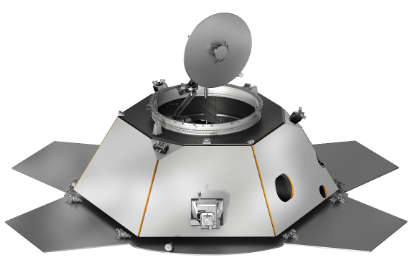
Figure 1: Rendering of a LISA spacecraft under development by OHB System AG under contract to ESA. Solar panels are deployed around the base. In addition to providing power, the solar array will keep the rest of the spacecraft in permanent shadow, providing a stable thermal environment for LISA’s ultrasensitive instruments. [Credit: OHB]At ESA, LISA has passed an important milestone with the signature of the prime contract with OHB System AG in June 2025 and the kick-off of industrial activities.
An article describing this important step can be found here. The project is now in the Preliminary Definition Phase, working closely with the Prime Contractor while in parallel conducting Preliminary Design Reviews of the individual payload elements. This phase will culminate in the Mission Preliminary Design Review, scheduled to start at the end of this year and conclude in early 2027.
At NASA, LISA was included as a line-item in the fiscal year 2026 appropriations bill, a significant step in stabilizing LISA funding in the US. The NASA Project completed Key Decision Point B (KDP-B), formally advancing the NASA effort to Phase B. The next major Project milestones are the NASA Preliminary Design Review (PDR) and KDP-C planned for mid-2027. NASA delivered two telescope structural models (SMs) to ESA’s spacecraft prime contractor OHB in May 2026. The SMs are metal replicas of the all-glass flight telescope design which match the mass, center of gravity, moments of inertia, and other relevant structural properties. At OHB, the telescope SMs will be integrated into a structural model of the LISA Core Assembly (LCA), which will be tested to validate structural models and confirm the load requirements on the telescope and other components of the LCA. The SMs are the first NASA deliveries to ESA in the telescope program and were made on time.
The next delivery will be a flight-like engineering test unit in 2028. NASA is also making significant progress on the laser sub-elements, and is proceeding with system-level testing of the Charge Management Device.
LISA Risk-Mitigation Work and European Telescope Development
ESA has begun risk-mitigation activities for key elements of the LISA mission. One concrete step, as reported by European Spaceflight, is the signing of a €26.1 million Phase 1 contract between ESA and Thales Alenia Space for the development of the telescopes onboard LISA mission. Thales Alenia Space will lead the telescopes’ development, design, assembly and testing, while working jointly with Thales SESO on optical assembly and alignment and on environmental and performance tests. The telescopes are described as a major technological challenge requiring picometer-level stability. This work adds to other Thales Alenia Space contributions to the mission, including spacecraft avionics and control software, telecommunications, the drag-free and attitude control system, and the propulsion subsystem. European Spaceflight reports that ESA described the telescope contract as part of risk-mitigation actions taken in response to budget uncertainties in the US rather than an anticipated withdrawal from NASA. NASA leadership have publicly stated that the commitment to LISA is secure and progress continues to be made on the NASA telescope prototypes.
Events
VI Gravi-Gamma-Nu Workshop 30 September – 2 October 2026, Milano Bicocca University, Italy
The sixth edition of the Gravi-Gamma-Nu Workshop will be held at Milano Bicocca University in the Lombardy region of Italy. This year's meeting will focus on the latest observational results from new all-sky surveys in the multimessenger context. The workshop format includes invited and contributed talks, and participation by PhD students and early-career researchers is strongly encouraged. Registration and abstract submission are now open through the workshop website.
8th Black Hole Nepal Meeting: Many Faces of Stellar-Mass Black Holes 12–16 October 2026, Kathmandu, Nepal
The 8th Black Hole Nepal Meeting, Many Faces of Stellar-Mass Black Holes, will bring together theorists and observers to discuss recent progress in the study of stellar-mass black holes, their formation and evolution, and their observational signatures across the electromagnetic spectrum and beyond. Topics will include black hole mergers, spin measurements, X-ray polarization, jets, extended TeV emission, collapsars, and ultraluminous sources powered by black holes. Participation is limited and early registration is encouraged. More details can be found here.
Gravitational Waves at the Fin del Mundo January 18–22, 2027, La Serena, Chile
Following the Gravitational Wave School, the international conference Gravitational Waves at the Fin del Mundo will bring together leading experts in strong-field gravitational physics and astrophysics. Also hosted in La Serena, Chile, the meeting will provide a forum for discussion of recent advances in gravitational-wave science and related areas of astrophysics. Details about the event can be found here.
4th Gravitational Wave School in Chile January 11–15, 2027, La Serena, Chile
The 4th Gravitational Wave School in Chile will continue its mission of training a new generation of scientists in gravitational-wave astronomy. Hosted at Universidad Central in La Serena, the school aims to provide graduate students—particularly from South America—with access to topics including black hole physics, gravitational-wave astronomy, and current developments in the field.
The program will cover areas such as black hole perturbation theory, numerical relativity, gravitational-wave data analysis, tests of general relativity using current and future detectors, and synergies with electromagnetic observations. Participation is free of charge, with applicants selected by the organizing committee. PhD students and early-career researchers, especially from Latin America, are encouraged to apply. Registration details are available through the event website.
CosmoFONDUE: Cosmological Fundamental Observables and Novel Discoveries in Universe Evolution 25–29 January 2027, CERN, Switzerland
CosmoFONDUE will take place in the CERN Council Chamber and aims to provide an opportunity for scientists from across all fields of cosmology to interact in an engaging and inclusive environment. The conference seeks to encourage discussions on promising new research directions while fostering exchange between junior and senior researchers. The programme will feature invited speakers from institutions across Europe, Asia, and North America. Abstract submissions are open until 1 November 2026, with registration closing on 15 November 2026.
Information about the venue, including directions and accessibility details, can be found on the conference webpage.
[Past Event]
LISA DDPC Summer Workshop 2026 June 8–12, 2026, Bucharest, Romania
[Credits: LISA DDPC]
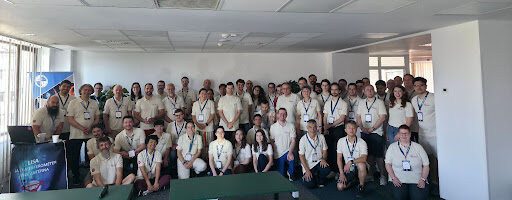
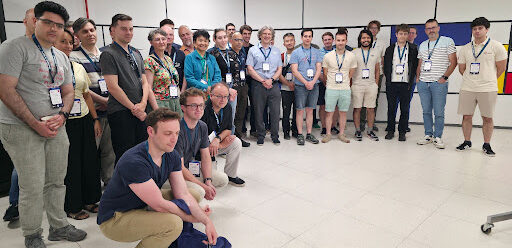
The LISA Distributed Data Processing Centre (DDPC) Summer Workshop took place in Bucharest, bringing together participants from across the LISA Science Ground Segment community. The program included Coordinating Unit meetings, workshop sessions, and plenary discussions, providing an opportunity to exchange updates, coordinate ongoing activities, and strengthen collaboration across the project. The meeting was held in both in-person and online formats.
[Credits: LISA DDPC]
Also, a dedicated DDPC Developers Workshop was held a day before the official start of the LISA DDPC Summer Workshop, bringing together software developers and contributors for a programme of presentations, discussions, demonstrations, and hands-on activities.
Topics included software development guidelines (LISSEN WG4), software licensing practices, commons development (LISSEN WG5), ProtoLab, PipelineRunner deployment and usage, authentication and authorization on DCC applications, GlobalIndex, and the L01 code review process. The session also included practical work on SonarQube and software testing, providing participants with an opportunity to discuss and explore common tools, workflows, and development practices across the DDPC community.
Humans of LISA is an ongoing social‑media feature from the LISA Consortium that spotlights the people behind space‑time exploration. It’s a short, portrait‑style profile of scientists, engineers, and students whose work powers LISA.
Juan Pablo Rodriguez Garcia — ESA Payload Systems Engineer
[Juan Pablo Rodriguez Garcia]Juan is a Payload Systems Engineer at the European Space Agency, where he works on LISA Systems Engineering and supports the development and verification of several key elements of the mission’s payload. His role involves coordinating technical activities between institutes and industrial partners, reviewing requirements, contributing to design reviews, and helping ensure that the payload will perform as expected once in space.
A significant part of Juan’s work lies in translating complex engineering challenges into practical solutions, helping turn the extraordinary science goals of LISA into a mission-ready reality.
Beyond his work on LISA, Juan enjoys staying active and spending time in nature. He is a passionate runner, he has completed several marathons, and he also enjoys snowboarding. Whether running, travelling, or exploring new places, Juan is drawn to activities that combine adventure, endurance, and the outdoors.
The LISA Astrophysics Working Group (astroWG) is where the astrophysical source models, population catalogs, and theoretical frameworks are developed that LISA will need to make sense of the gravitational wave view of the universe. Spanning massive black hole mergers, compact stellar binaries, extreme mass ratio inspirals and beyond, the astroWG connects theorists, simulators, and observers working to turn LISA's data into a story.
The working group currently runs 14 active collaborative projects. Anyone interested in contributing can contact project coordinators directly. Full descriptions are available here.
Massive Black Holes:
Dual/Binary AGN: Bridging observed dual-AGN samples with theoretical massive black hole binary models to constrain orbital decay mechanisms and reduce merger rate uncertainties.
Environment of MBH Mergers: Using cosmological simulations and semi-analytic models to characterize the galactic and large scale environments that host massive black hole mergers.
Waveform Parameter Space (with WaveformWG): Defining the parameter space (mass ratio, eccentricity, spin, environmental effects) that waveform models need to cover across all LISA black hole binary sources.
Ultra-Compact Binaries:
UCB Catalogs vs. Observations: Benchmarking double white dwarf population models against existing observational constraints across progenitor and final populations.
Extending UCB Catalogs to Mass-Transferring Systems: Adding interacting compact binaries (helium-transferring white dwarf pairs, cataclysmic variables, and ultracompact X-ray binaries) to the LISA source inventory, alongside the detached double white dwarfs that current catalogs focus on.
Extragalactic DWD Foreground: Quantifying astrophysical uncertainties in the unresolved double white dwarf binary background expected to dominate the LISA band above ~3 mHz.
LISA Triples and Circumbinary Planets: Modeling triple stellar systems and their Lidov-Kozai-driven gravitational wave signatures, including potential circumbinary companions.
EMRIs & Stellar-Mass Sources:
EMRI Catalogs: Extending the MBHCat methodology to build catalogs of extreme mass ratio inspiral events across diverse black hole population models.
Dynamical Binaries in the Galaxy and Local Volume: Cataloging compact binaries assembled in star clusters from the Milky Way through the Local Group.
Updatable Predictions for Stellar-Mass BBHs (AGNostic): A flexible framework for modeling LISA-detectable stellar mass black hole binaries. Designed to update as new LVK results become available.
Cross-Cutting Infrastructure:
Data Standards and DDPC-Friendly Catalogs: Developing a unified catalog schema and conversion pipeline for all LISA source types.
Living Reviews Update - Stellar Compact Binaries: Refreshing the astroWG Living Reviews in Relativity white paper with current science on stellar compact binaries.
Living Reviews Update - Massive Black Holes: Refreshing the astroWG Living Reviews in Relativity white paper with current science on massive black holes.
Living Reviews Update - EMRIs: Refreshing the EMRI section of the astroWG Living Reviews in Relativity white paper, with particular attention to quasi-periodic eruptions and connections to fundamental physics.
The astroWG is an active and collaborative space. If any of these projects align with your work, reach out to the coordinators listed here.
LISA on social media - share your publications, news and profiles though LISA social media. Let us know of any news you would like to share or contribute to one of our existing formats: #LISAPapers: share news of your papers! [Online form on GoogleDocs…] #HumansOfLISA: share a humans of LISA profile! [Online form on GoogleDocs…]
You can find LISA on:
Publications and PhDs
PhD Thesis Spotlight
Maciej Kierkla — University of Warsaw
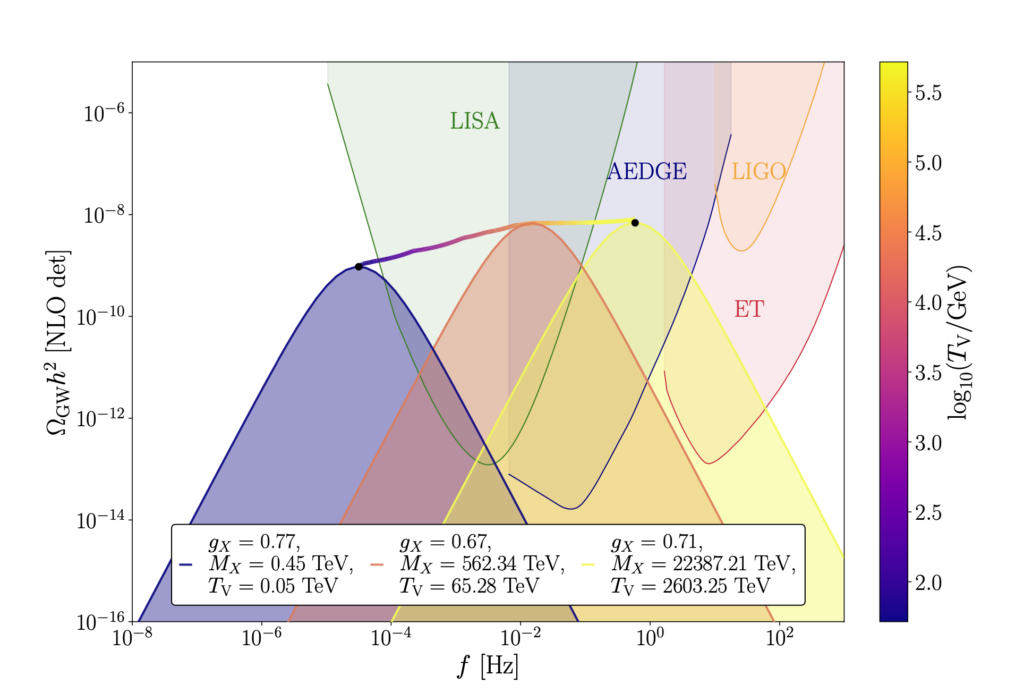
Maciej Kierkla completed his PhD at the University of Warsaw under the supervision of Z. Lalak and B. Świeżewska. His thesis, “Theoretical consistency and phenomenology of supercooled cosmological phase transitions,” investigates supercooled phase transitions in the early Universe, which are prime candidates for strong gravitational-wave signals that could be observed by LISA.
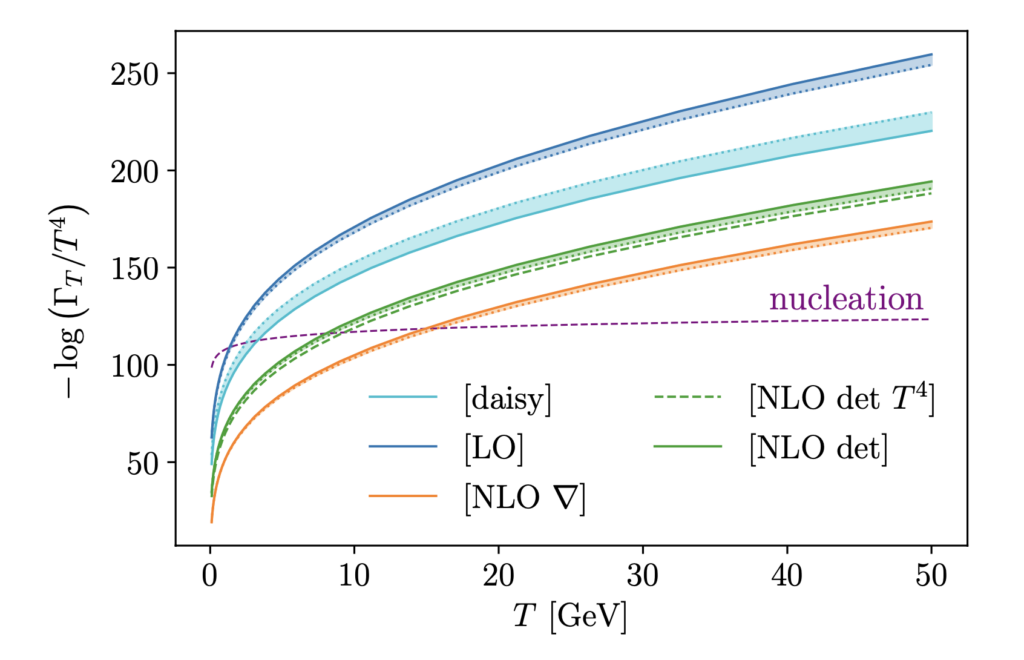
In his work, Maciej focused on a concrete beyond-the-Standard-Model scenario, the SU(2)cSM model, providing a robust description of the transition and predictions for the resulting gravitational-wave signals. Using an effective field theory framework, he calculated the next-to-leading-order bubble nucleation rate and discussed the associated theoretical uncertainties. He also analysed how these uncertainties affect physical observables, including the percolation temperature and the signal-to-noise ratio.
The thesis has been uploaded to arXiv and is expected to appear soon. For now, it can be accessed via INSPIRE.
Gravitational wave spectra from the phase transition in SU(2)cSM. Example spectra for three BM points. The solid lines connect the peak amplitudes of the largest signals in SU(2)cSM, and the colouring corresponds to a value of TV , which is the main parameter controlling the redshift of peak frequency. [Credits: Maciej Kierkla]
Different approaches for computing Γ_{T} /T^{4} for a benchmark point with g_{X} = 0.8 and m_{X} = 10^{4} GeV. Bands illustrate the sensitivity of different approaches to the choice of 4d RG scale at µ_{4} = πT (solid) and µ_{4} = 7T (dotted). The [NLO det T^{4} ] curve is evaluated at µ_{4} = 7T. The 3d scale is set to µ_{3} = T.[Credits: Maciej Kierkla]
Kylan Jersey — The University of Arizona
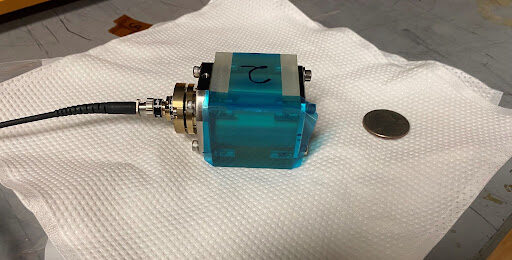
Kylan Jersey completed his PhD at The University of Arizona under the supervision of Felipe Guzman. His thesis, “The Optical Truss Interferometer: A Convenient Solution for Picometer Sensitivity in the LISA Telescopes and Beyond,” presents the design, development, and implementation of a prototype optical truss interferometer, originally conceived as a contingent subsystem for the LISA telescopes.
The optical truss interferometer was designed to provide a witness of the optical path length stability of each telescope in flight. By integrating compact, freely mountable, fibre-coupled units onto a plate of ultra-low expansion glass, the work demonstrated sub-picometre displacement sensitivity in the millihertz frequency band where LISA will detect gravitational waves. The thesis also shows the potential of the optical truss interferometer as a “plug and play” system that can be integrated with a stable structure under test without requiring significant design changes.
Photo of the first-generation prototype after fabrication and assembly. The photo shows an OTI input stage with a quarter for a size reference.
Consortium members who would like to promote their PhD thesis in the newsletter and on social media are invited to submit their details via the [Online form on GoogleDocs], or email the editorial team with the thesis details and any relevant photos (please include captions and credits).
Publications Spotlight
The LISA Astrophysics MBHCatalogues Project: Mapping the Unknown
When two galaxies collide, their central black holes don't immediately follow suit. The massive black holes at the core of each galaxy must first sink toward each other through gas and stars. This can take anywhere from millions to billions of years before they finally spiral together and produce the gravitational wave signal LISA was built to detect. Predicting how often this happens and what it will look like is one of the central challenges of LISA science preparation.
A new paper from the LISA Astrophysics Working Group takes on that challenge. The MBHCatalogues (MBHCat) project brings together 20 semi-analytical models and cosmological simulations to predict massive black hole binary (MBHB) merger rates across cosmic time. The result is the most comprehensive picture yet of what LISA might see and how much we still don't know.
Twenty models, one question
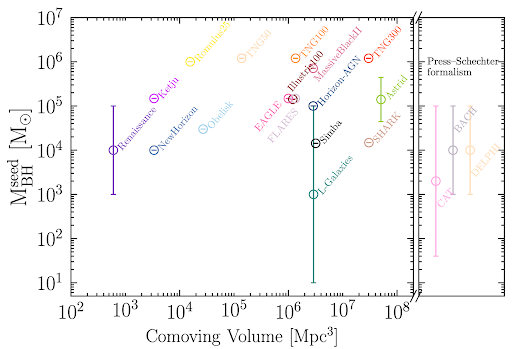
The 20 models in MBHCat range from large-volume cosmological simulations like IllustrisTNG and EAGLE to high-resolution zoom-ins like Renaissance and Ketju, alongside semi-analytical frameworks including L-Galaxies, BACH, and DELPHI. Each makes different assumptions about how massive black holes first formed, how they grow, and how long it takes them to merge after their host galaxies do.
Each of the 20 models in MBHCat sets its own initial conditions like how massive the first black holes were at birth and how much cosmic volume the simulation covers. Hydrodynamical simulations tend to start with one fixed, fairly large seed mass, while semi-analytical models explore a much wider range, down to just tens of solar masses. That range is the uncertainty LISA is built to narrow down. [Credits: Izquierdo-Villalba et al. 2026, arXiv:2605.00092]
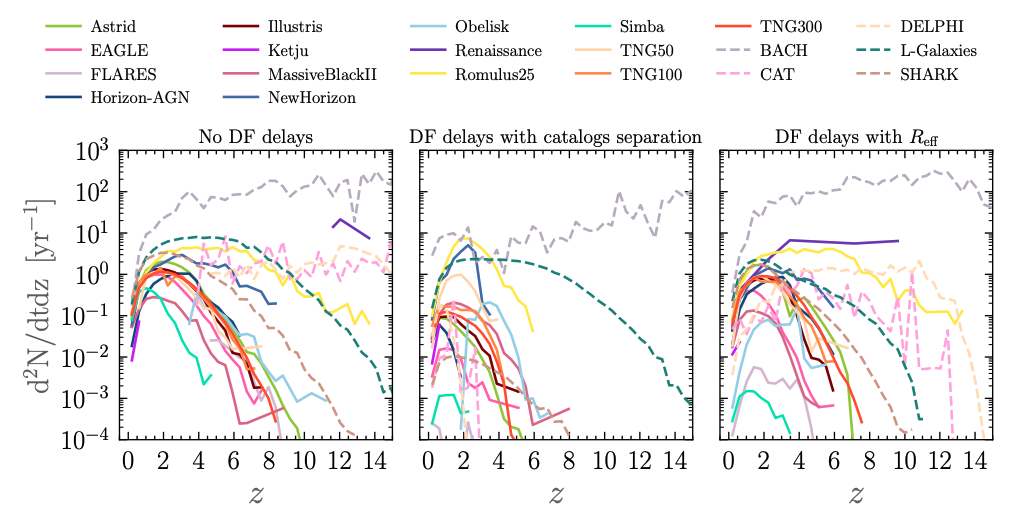
The spread in predicted LISA detection rates across these models spans from fewer than one to potentially thousands of events over a four year mission. That spread isn't a flaw in the analysis…it's the point! It maps where our theoretical uncertainty lives and where LISA's observations will do the most to resolve it.
Seeds of uncertainty
Timing isn't the only thing driving that spread. The single biggest driver of disagreement between models is the question of black hole seeds: how did the first massive black holes form in the early universe? Models using light seeds (remnants of the earliest stars) predict far more low-mass mergers than those using heavy seeds, which form from the direct collapse of massive gas clouds. It's a butterfly effect that ripples across cosmic time.
The colored lines here show a model's predicted merger rate across cosmic history, tracked under three different assumptions about delay: no delay at all, delay based on each model's own separation data, and delay based on a standardized galaxy size. Adding delays pushes some predictions to lower redshift and shrinks others, a reminder that when these mergers happened is almost as uncertain as how many happened. [Credits: Izquierdo-Villalba et al. 2026, arXiv:2605.00092]
LISA is uniquely positioned to settle this. Its sensitivity peaks in exactly the mass range where the seeding models diverge most sharply. What LISA detects, or doesn't detect, will directly constrain the origin of the first black holes.
More than a science paper
MBHCat is also infrastructure. The catalogs from all 20 models are being made publicly available as a community resource. Designed to support LISA science preparation over the coming decade, researchers can apply their own delay prescriptions, detection pipelines, and parameter estimation frameworks to a shared, standardized dataset.
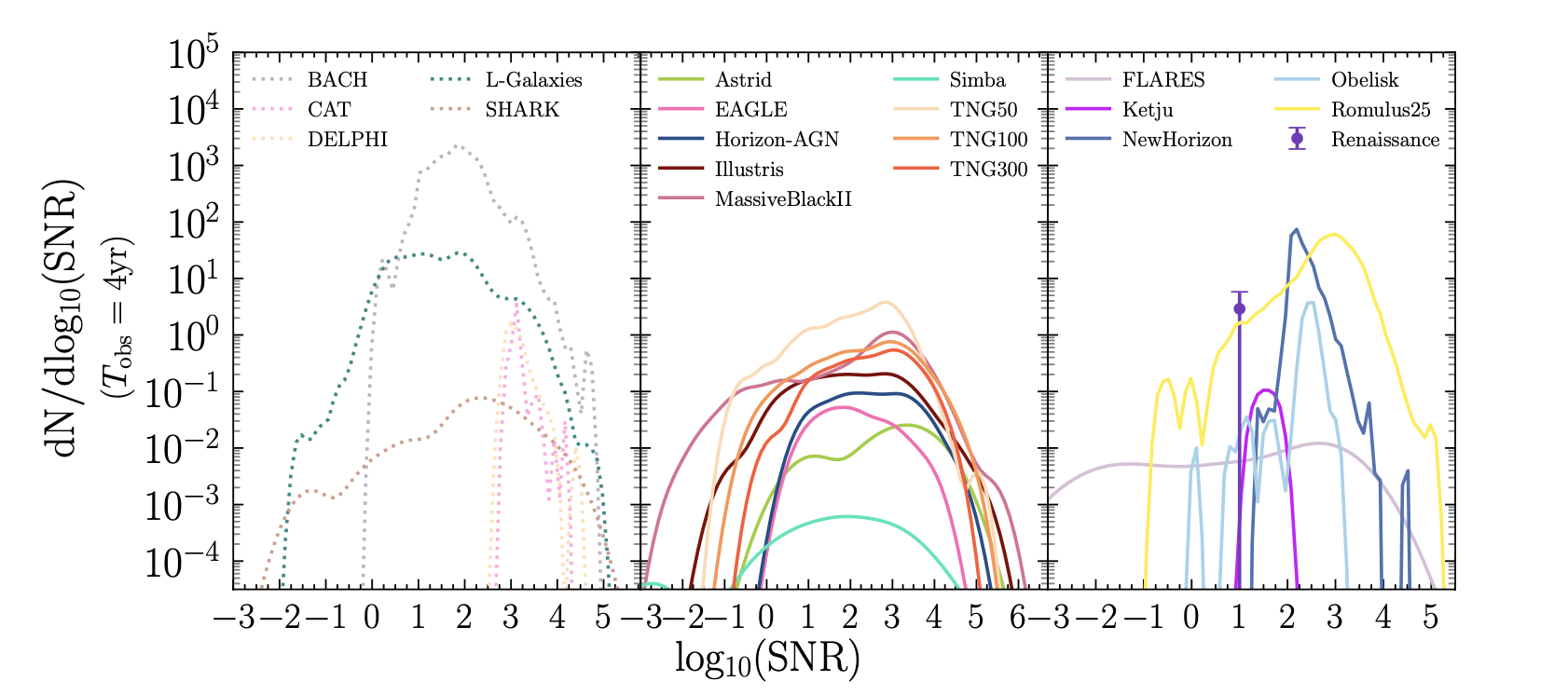
Grouped into three panels by model type, the predicted gravitational wave signals mostly land well above LISA's detection threshold. The few exceptions cluster at the edges: mergers either too faint or happening in mass ranges LISA is less sensitive to. [Credits:Izquierdo-Villalba et al. 2026, arXiv:2605.00092]
The uncertainty is in the details, not the detections. The question MBHCat is built to sharpen is how many, at what masses, and what LISA detections will tell us about the black holes that seeded the first galaxies.
ESA Research Fellowship in Space Science (Postdoctoral Fellowships)
The 2026 Call for Applications for the European Space Agency's Research Fellowships in Space Science is now open. Approximately 9-10 postdoctoral fellows are expected to be recruited under this call, with fellowships scheduled to commence in autumn 2027.
The deadline for applications is 21 September 2026.
ESA's postdoctoral Research Fellowship programme offers early-career researchers the possibility to carry out independent research in a variety of disciplines. Research Fellowships in Space Science offer the opportunity to contribute to ESA's endeavour to explore our Solar System and the Universe in the fields of heliophysics, planetary science, astrophysics, and fundamental physics.
ARTEMIS Laboratory (CNRS) — Research Engineer Position in Laser Interferometry
The ARTEMIS Laboratory (UMR7250) in Nice, France, will soon open applications for a permanent Research Engineer position focused on the Pre-Stabilized Laser (PSL) subsystem of the Virgo gravitational-wave detector. The successful candidate will join the Lasers and Cavities team and take responsibility for the development, installation, upgrade, and maintenance of the Virgo laser system, while also contributing to laser developments for future third-generation gravitational-wave detectors.
The position involves work on interferometric optics, metrology, photonics and laser systems, detector commissioning activities, and collaboration within the Virgo project. Experience in areas such as laser physics, signal processing, electronics, and experimental instrumentation is particularly relevant. The role offers the opportunity to contribute to Virgo, LISA, Einstein Telescope, and related gravitational-wave research activities within ARTEMIS.
Interested candidates are encouraged to contact Nelson Christensen (nelson.christensen@oca.eu) or Walid Chaibi (walid.chaibi@oca.eu) for further information. Applications are expected to open soon.
The RING Project (Germany) — 1 Postdoctoral and 14 PhD Positions
The recently funded RING project in Germany is recruiting one postdoctoral researcher and fourteen PhD students across multiple disciplines, including physics, geophysics, geodesy, hydrology, and seismology. The project has strong connections to instrumentation research for gravitational-wave detection and aims to advance ring-laser technology for ultra-precise rotational motion sensing.
RING brings together a multidisciplinary team across several German institutions to develop new approaches in quantum optics and metrology, improve measurements of Earth Orientation Parameters, and investigate ground-motion sensing relevant to future gravitational-wave observatories. Successful candidates will benefit from access to modern experimental facilities and a broad scientific training environment.
Further information on the project, participating institutions, and open positions can be found on the RING project website. Researchers are encouraged to share these opportunities with interested MSc students, PhD candidates, and postdoctoral researchers.
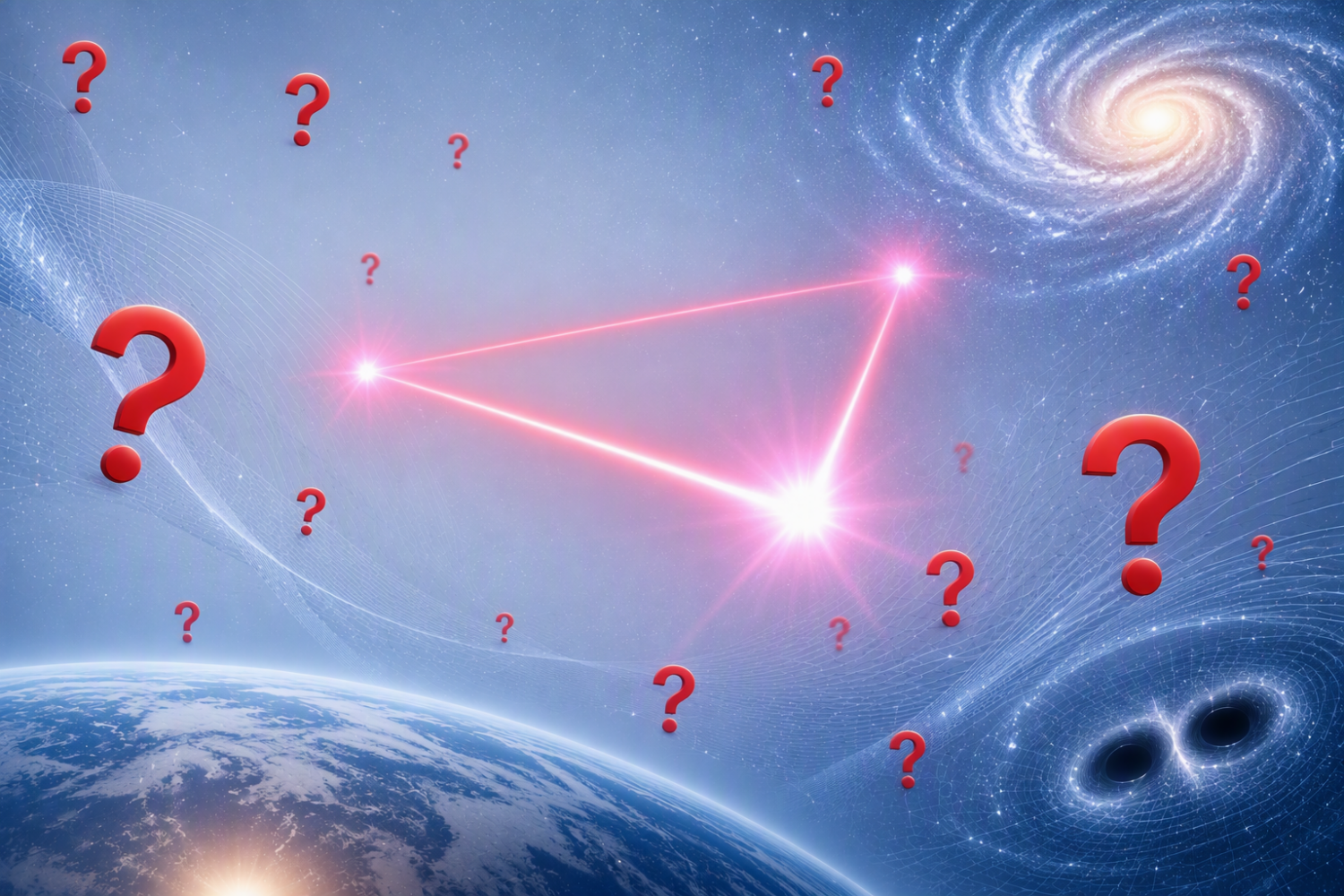
In this edition, we introduce a new section dedicated to fundamental questions about LISA — the kind of clear, curious questions that often come from students, early-career researchers, science communicators, and the wider public. LISA is a technically ambitious mission, and explaining why it is designed the way it is can help make the science and engineering behind it more accessible.
“Hello Lisa team, I'm just an astronomy enthusiast, and I have a simple question for you: Why are Lisa's components only three, arranged in an equilateral triangle? Space has three dimensions, and therefore gravitational waves are also three-dimensional, so why didn't you use four detectors arranged in a regular tetrahedron?”
The short answer would be that gravitational waves may travel through 3‑D space, but (in Einstein’s general relativity) they don’t “wiggle” in three independent ways. A passing gravitational wave stretches space in one direction while squeezing it in the perpendicular direction, and it can do this in two patterns (often called “plus” and “cross”). So, our challenge is not to build a 3‑D “cage” of detectors but to measure those (extremely) tiny stretch‑and‑squeeze patterns as cleanly as possible.
That’s where LISA’s configuration proves its purpose: three spacecraft, spaced approximately 2.5 million km apart (so its not exactly equilateral triangle), exchange laser beams and act like a giant space-rulers for the smaller than an atom’s diameter stretches and squeezes of the space-time when a gravitational wave passes by. Having three sides, LISA gets multiple independent measurements and can combine them to separate real gravitational‑wave signals from instrumental/laser noise (a technique called time‑delay interferometry).
Could four spacecraft help? In principle yes, more links give more redundancy, but they also add major complexity, cost, and operational risk. The triangle is the sweet spot: it’s the simplest architecture that still delivers the key physics LISA is designed to measure.
Q: How do the spacecraft stay in a stable position?
The three spacecraft are inserted into separate heliocentric, Keplerian orbits chosen to make a near-equilateral triangle that slowly “cartwheels” as it follows Earth around the Sun. The spacecraft separations are not perfectly equal and naturally vary over time as each spacecraft locally follows its test mass. LISA therefore combines the six one-way laser measurements with carefully matched time delays, a method called time-delay interferometry. This cancels the much larger fluctuations from the lasers themselves, leaving the gravitational-wave information.
Solar radiation pressure, solar wind, and tiny spacecraft disturbances would push the spacecraft but sensors will detect any relative drift, and micronewton thrusters gently move the spacecraft so that it remains centred around the test mass.
Q: How does LISA measure the gravitational waves?
Each spacecraft carries two free-falling test masses. Lasers link the three spacecraft and the test masses and a passing gravitational wave produces a characteristic, changing pattern: one measured separation may increase while another decreases, and then the pattern reverses as the wave passes.
LISA measures this through the phase of laser light. Light has a wavelength of roughly a micrometer, so its repeating wave crests act like extraordinarily fine ruler marks. By comparing the phase of incoming laser light with a local laser, LISA reconstructs changes in the distances between test masses at the picometre scale—trillionths of a meter—across millions of kilometers.
Q: Why do we care about black holes so far back in time?
The main answer is because distant black-hole mergers are a record of how the Universe assembled itself even before the first stars or galaxies. Also, it can answer specific questions like: What were the first “seed” black holes: remnants of the first stars, direct-collapse objects, or something else? How did some grow into million- or billion-solar-mass black holes surprisingly early in cosmic history? How did black-hole mergers and galaxy mergers influence one another? Does general relativity still describe gravity accurately around the most massive, rapidly changing black-hole systems?
LISA can measure the masses, spins, distances, and merger histories of these systems through their gravitational-wave signals. That gives information that ordinary telescopes often cannot obtain when early black holes are faint, obscured by dust, or not actively feeding.
HOW-TOs and WHO-TOs
How to access LISA Consortium related informations
You want to find out more about the LISA Consortium? Access the LISA Consortium webpage.
If you are already a member of the LISA Consortium you can also use your LISA Directory credentials and login into LISA Wiki.
Interested in becoming part of the LISA community? See the LISA Consortium User Guide to learn how to join.
If you want to propose content for an upcoming issue, submit a LISA‑related comic strip, share feedback on the current issue, or join the editorial team, ...
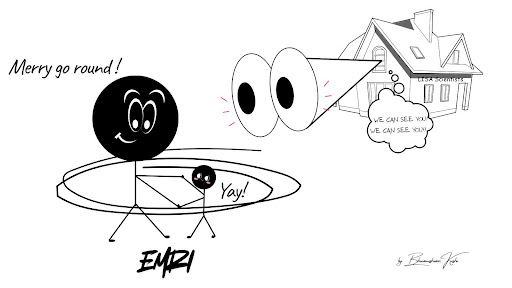
Many thanks to Bhuvaneshwari Kashi for this edition's heartwarming comic strip.
About
You received this email because you signed up for our newsletter, or you are a member of the LISA Consortium. If you no longer wish to receive the newsletter, you can unsubscribe using the specific link in the footer.
The LISA Newsletter is published by the LISA Consortium.
LISA Consortium Management Team: Niels Warburton, Jonathan Gair, Richard Brito, John Regan, Kelly Holley-Bockelmann, Susanne Milde, Shane Larson, Tamara Bogdanovic, Daniele Vetrugno, Gianluca Calcagni
LISA Consortium Council chairs: Richard Brito, John Regan
 2026 / AUG 31
 Looking ahead to 2028, the LISA Consortium Management Team and the Gravitational Wave International Committee (GWIC) have invited proposals to host the next International LISA Symposium.