At the beginning of 2024, the LISA mission was formally adopted by ESA. This was an inflection point that moved the project into the implementation phase and set in motion the transition to a new LISA Consortium structure.
The newsletter is designed to keep our community informed, connected, and engaged as LISA advances toward flight. Here’s what you’ll find inside:
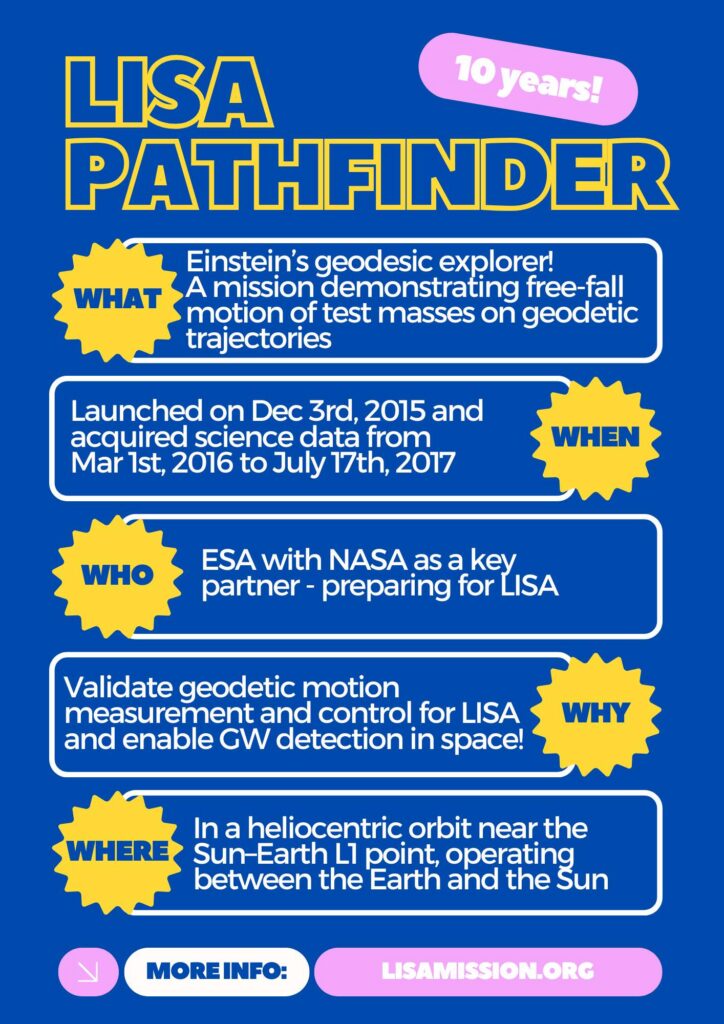
The 10th anniversary of the launch of the LISA Pathfinder (LPF) mission
Consortium News
Events - upcoming gatherings, along with selected events across our broader community.
Humans of LISA – highlighting the people driving LISA forward.
Jobs & Opportunities – current openings across partner institutions for scientists and engineers working on LISA and gravitational‑wave astronomy.
New Publications & PhD Theses – community research spotlights
How‑tos & Who‑tos - practical guides and pointers (rolling additions).
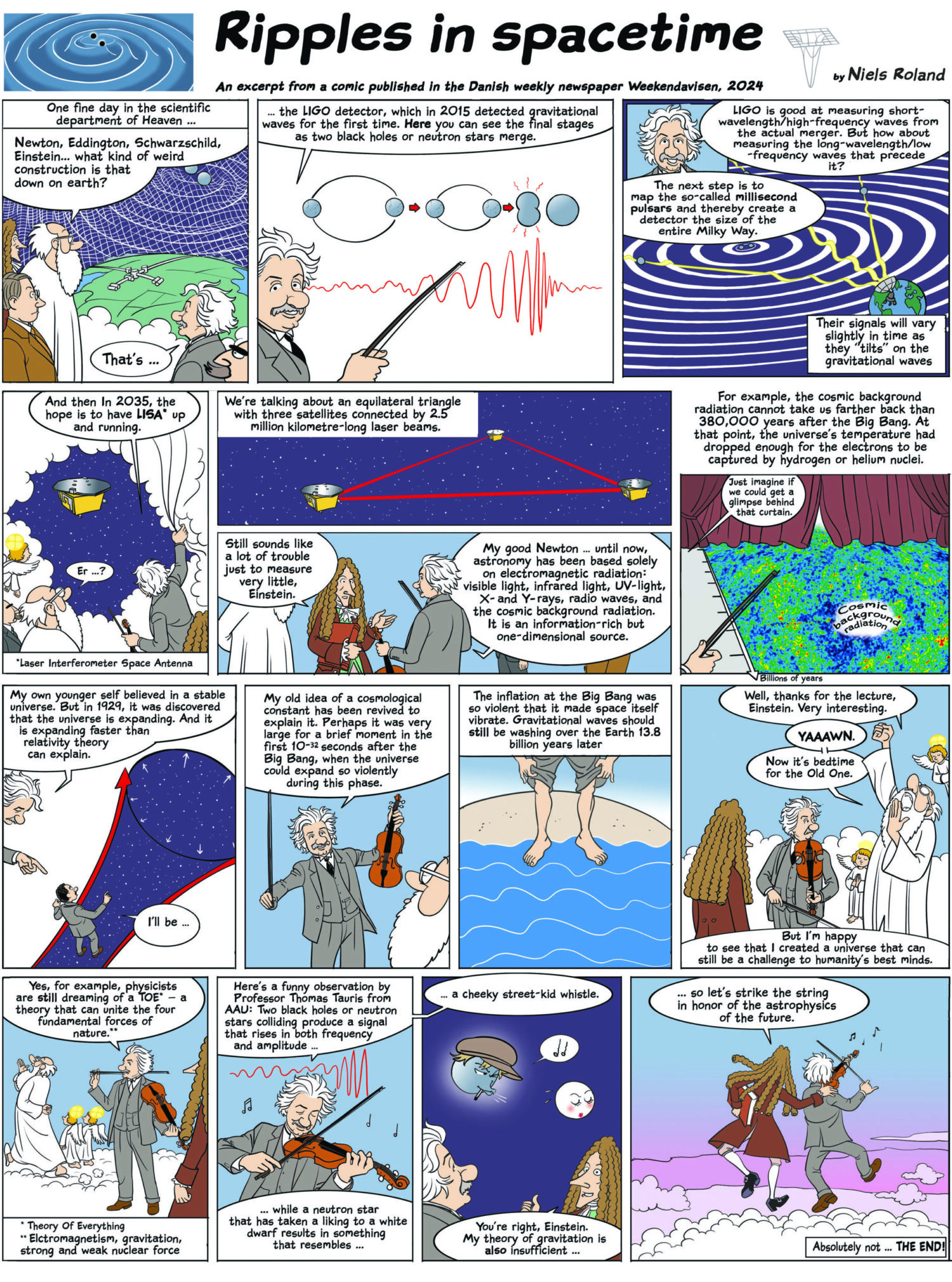
LISA Comic Strip - a bit of science art to round things out.
You’re invited to contribute. This newsletter thrives on community input. Share news of your papers via #LISAPapers, propose a profile for #HumansOfLISA, or send topic ideas, images, and announcements to the editorial team. You can also help shape future issues: volunteer as a contributor, section editor, or reviewer by emailing us at newsletter-team@lisamission.org.
Thank you to everyone who contributed with ideas, content, and reviews to this first issue. We’re excited to build this publication with you!
The Editors
Focus Topic
LPF 10th Anniversary
This December, we celebrated 10 years since the launch of LISA Pathfinder (LPF), ESA’s in‑space technology demonstrator for our LISA gravitational‑wave detector. NASA was a key partner of ESA in this project.
LISA Consortium Spokesperson Niels Warburton kicked off the celebration with a post on December 3rd on LISA social media:
“Today, we commemorate the tenth anniversary of the launch of the LISA Pathfinder (LPF) mission. This milestone was a moment of deep pride for the entire LISA Community and the thousands of people who contributed to this extraordinary feat of engineering and science.
LISA Pathfinder was an extremely successful mission that demonstrated our ability to go above and beyond the key technological requirements for the future LISA mission. LPF successfully measured and controlled the motion of the test masses in space with unprecedented precision, effectively removing one of the main technological risks and paving the way for LISA to become reality.
The success of LPF is a testament to the dedication of its international team. This was a scientifically, technologically, and organizationally demanding project whose success created the essential conditions that now enable us to realize the revolutionary potential of LISA.
We are now half way between the launch of LPF and the nominal launch date of the LISA. Looking to the next decade one of our key responsibilities is to ensure the knowledge and expertise developed through the LPF project are passed on to the next generation of scientists and engineers.”
Discover LPF stories, memories, quotes and more on Facebook - follow #LPF10anniversary. Launched on 3rd December 2015 at 04:04 UTC on a Vega (VV06) from Europe’s Spaceport (Kourou), LPF’s objectives were to keep two gold‑platinum test masses in near‑perfect free fall and measure their relative motion with picometre precision, using drag‑free and attitude control to remove spacecraft noise, demonstrating geodesic motion and low‑frequency interferometry (1 - 30 mHz, ≈10⁻¹² m Hz-¹/²), and validating the hardware’s endurance in space.
We marked the anniversary on our social media platforms by posting LPF stories, memories from the LPF team, short anniversary interviews, highlights, historic footage, and quotes from the people who built and flew the mission. Follow the hashtag #LPF10anniversary to discover all these and many more.
Looking ahead, we plan to keep the LPF story alive and public during 2026. We’ll keep you posted through Consortium channels and, of course, via #LPF10anniversary.
News
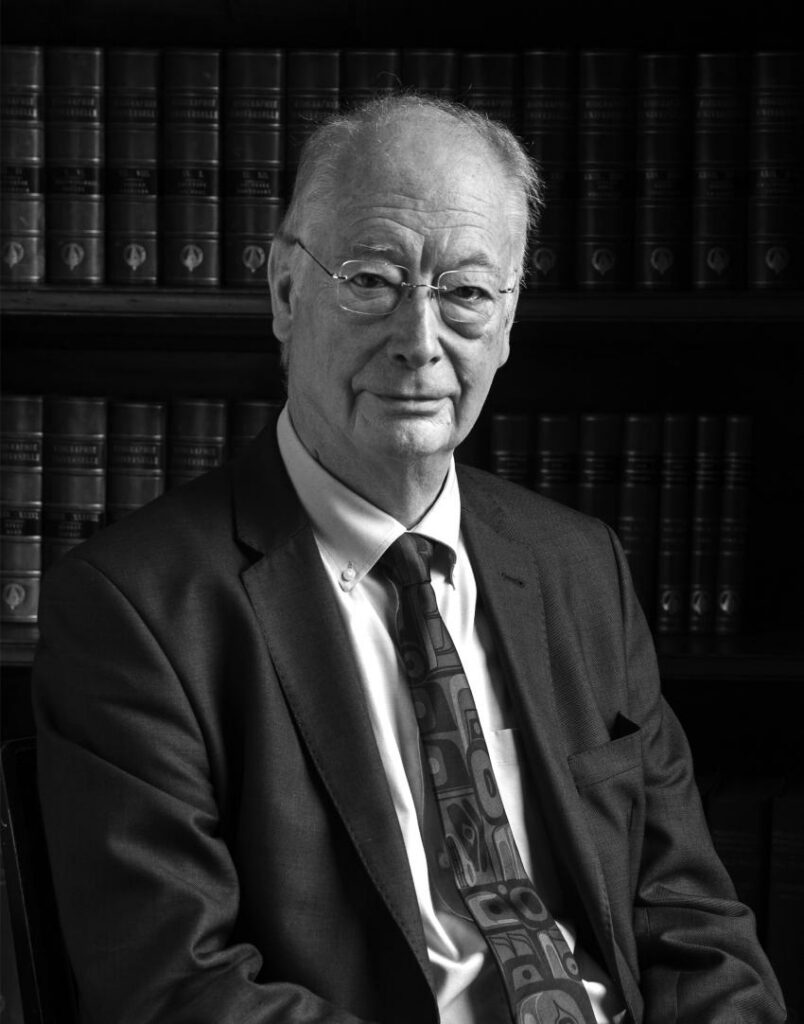
We mourn the passing of Professor Mike Cruise, who has died at the age of 78
Credit: Lucinda Douglas Menzies Licence type: Attribution (CC BY 4.0) Professor Cruise played a leading role in the development of the Laser Interferometer Space Antenna (LISA) mission and was instrumental in strengthening the United Kingdom’s contribution to this landmark international endeavour. A distinguished scientist devoted to fundamental research, he made significant contributions to gravitational wave science and to the advancement of space instrumentation.
An accomplished educator and advocate of knowledge transfer, Professor Cruise authored the respected textbook The Principles of Space Instrument Designand mentored generations of students and researchers. Even after formally retiring from the University of Birmingham in 2012, he remained actively engaged with ESA, the RAS, the UK Space Agency, and the wider gravitational wave community.
He will be remembered not only for his scientific leadership but also for his kindness, thoughtfulness, and gentle sense of humour.
The LISA Consortium extends its sincere condolences to Professor Cruise’s family, friends, and colleagues. Our thoughts are with them at this difficult time.
"When Mike Cruise joined the University of Birmingham as Professor of Astrophysics in 1995 he continued to develop his existing interests in space-instrumentation and started to build a group focused on gravitational-wave research. Everyon"e remembers that his face would light up when talking about LISA and LISA Pathfinder. Even when he was appointed Head of School and later Pro Vice-Chancellor for Research, he remained involved in the day-to-day research activities of the Birmingham group until his formal retirement and beyond. Everyone who had the pleasure to interact with Mike remembers his passion for space science, sharp intellect, witty sense of humour and his relentless effort to support young researchers."
Professor Alberto Vecchio PhD, FRAS, School of Physics and Astronomy, University of Birmingham
Milestones
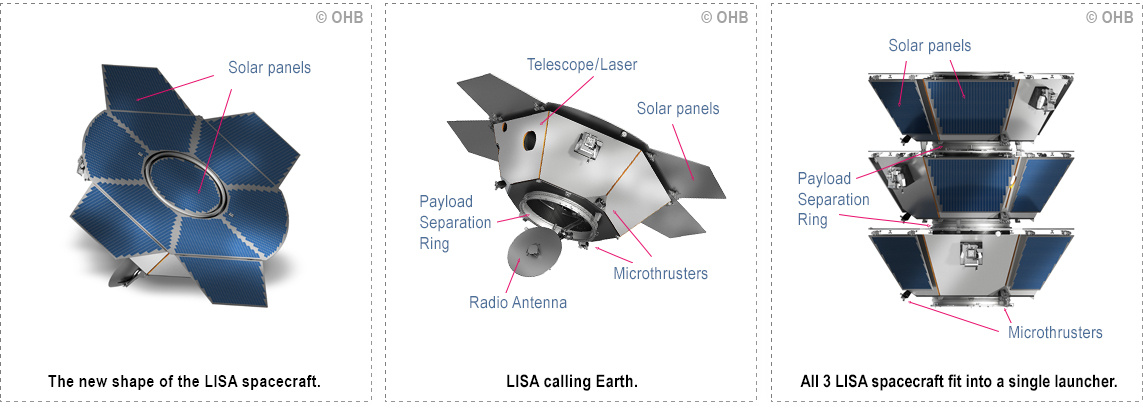
Major Milestone for LISA – Construction of the Spacecraft Constellation Begins
The prime contract for the LISA space segment, valued at €839 million, was awarded to OHB System AG, with Thales Alenia Space providing several mission-critical elements, including spacecraft avionics, control software, telecommunications, and the drag-free and attitude control system (DFACS). The DFACS will be essential for maintaining the precise formation and compensating for non-gravitational forces, ensuring the test masses inside each satellite follow a purely geodesic motion. Read the full story on ESA's Science & Exploration section.
Albert Einstein Institute Signs Contract With OHB to Deliver the Phasemeter
The Max Planck Institute for Gravitational Physics (AEI) is responsible for developing and producing the mission’s key instrument, the phasemeter, which will detect the tiny changes in laser light caused by passing gravitational waves. This precision technology, developed in Germany, is at the scientific heart of the mission.
The construction phase has now begun, with final spacecraft design and assembly underway. Find out more about this on AEI's webpage.
Consortium News
LISA Consortium Council: New Leadership, New Directions
The LISA Consortium has reached several major milestones in recent months, with the formation of its new Council, successful elections for key leadership roles, and the launch of important initiatives for the future.
The LISA Consortium Council was officially formed in July 2025, following a successful transition from the previous LISA Consortium. The Council is the decision-making body of the reformed Consortium, representing every core member either through a Member Group or their primary Science Working Group. The first Council consists of 91 members, including 41 Member Group representatives, 32 Working Group representatives, and 18 Working Group chairs.
The Council has overseen a series of elections to fill key leadership roles:
Niels Warburton was elected as the new Spokesperson of the LISA Consortium in October 2025. Congratulations to Niels and thanks to all candidates (Tamara Bogdanovic, Kelly Holley-Bockelmann, Shane Larson, Lucio Mayer, Deirdre Shoemaker and Maurice van Putten) for their vision and commitment.
Jonathan Gair was elected as the new LST representative of the LISA Consortium in October 2025. Congratulations to Jonathan and many thanks to the other candidates, Fabio Antonini, Laura Nuttall, and Arianna Renzini, for their contributions, and to Gijs Nelemans for serving as interim LST representative during the Consortium restructuring.
Richard Brito and John Regan were elected as co-chairs of the LISA Consortium Council in September 2025. Congratulations to Richard and John and thanks for taking on this important role.
Management Team
On November 13th, the Council approved the composition of the first Management Team (MT), which will implement Council directives and oversee day-to-day operations. The MT includes the Spokesperson, LST representative, and six additional appointed roles, that were ratified by the council as follows:
Deputy Spokesperson (US-based researcher): Kelly Holley-Bockelmann
Communications Officer: Susanne Milde
Community Officer: Shane Larson
Scientific Coordinator (Science WG liaison):Tamara Bogdanovic
Membership and Infrastructure Officer: Gianluca Calcagni
In addition, the chairs of the LISA Consortium Council, Richard Brito and John Regan, serve as observers to the Management Team.
The Council encourages all Consortium members to engage with their representatives, propose initiatives, and consider applying for open positions. For more information, you can consult the Consortium Bylaws and Policies and Procedures.
A New Communication Platform for the LISA Consortium
University College Dublin (UCD) is setting up a Mattermost platform for the LISA Consortium. The platform will be integrated with the LISA Mission Directory to keep access synchronized. The goal is to provide a reliable, real‑time space for working groups and the wider community to coordinate day‑to‑day discussions alongside formal channels.
The platform is now in the testing phase, with several actors, including the Working Groups chairs helping to test the structure, onboarding, and day‑to‑day flows. Very soon it will be opened to the Consortium core members.
Recent Grants Supporting LISA Science
We are pleased to share inspiring news that highlights the vibrant progress in our field and the growing scientific excitement around LISA.
Congratulations to our colleagues who are also members of the LISA Consortium for being awarded grants by the European Research Council (ERC):
Barry Wardell: Awarded an ERC Advanced Grant for the EMRIWaveforms project, which aims to develop the first accurate models of these signals, helping LISA unlock discoveries that are currently out of reach.
Miguel Zumalacárregui: Awarded an ERC Consolidator Grant for the GLOW project, which aims to develop new theoretical and data‑analysis tools to identify gravitational‑wave lensing in the wave‑optics regime. By exploiting diffraction and interference effects in lensed signals from massive black hole binaries, GLOW will open novel opportunities for LISA to probe dark‑matter structure and to test fundamental physics and cosmological gravity.
Zoltan Haiman Awarded an ERC Advanced Grant for Bright BHBs, a project that aims to study the inspirals and mergers of binary black holes, the radiation they emit, and the gravitational waves generated during this process.
Gianfranco Bertone Awarded an ERC Advanced Grant for De Tenebris (“On Darkness”), a project that aims to formulate clear and accurate predictions of dark‑matter phenomenology in strong‑gravity regimes to enable discovery with gravitational waves.
The Science Team's initial working groups were established at the first LST meeting at ESA in Noordwijk to make progress on LISA Catalogues, Communications, Authorship, Figure of Merit, and Science Topical Panels, joined at the end of the year by a newly-formed working group on Alerts.
The Communications working grouphas initiated a direct email address to the Science Team (AskLISA@cosmos.esa.int), has compiled and updated frequently-asked-questions for the ESA and NASA websites to be refined and coordinated, and is building a network of newsletter communications, of which this is the inaugural edition (hello!). The LST is focused on building interfaces with the broader scientific community through participation in scientific conferences, newsletters like this one, and regular interaction with the LISA Consortium.
The Catalogues working group has completed drafting the Catalogues Definition Document, which aims to describe the parameters that need to be provided for effective follow-up and data interpretation for each Science Objective. It will also determine the content and format of the Level 3 science catalogue, which is required to include gravitational wave candidates with detection confidence, estimated astrophysical parameters, strain time series, and the residual Level 1 data stream with candidate sources removed. The WG is working on identifying functional priorities and design features for data visualisation to enable preliminary analysis and catalogue cross-matching.
The Authorship working group has drafted definitions and policies for publication authorship and will be seeking input from the consortium and community.
The new Alerts working groupwas formed to determine the structure of information provided and the operation and structure of networks for electromagnetic follow-up of non-continuous sources.
The Figures of Merit (FoM) are a set of metrics designed to quantify the mission’s ability to meet its science goals, creating a direct link from instrument specs to science objectives. The immediate task of this WG is to update and streamline these metrics, and to produce a consolidated document with the final version of the FoM (LST version).
NASA News
NASA LISA Project Office Updates
On January 23, 2026, the President of the United States signed the Fiscal Year 2026 (FY26) Commerce, Justice and Science (CJS) appropriations bill into law.
FY26 covers the time period of October 1, 2025 – September 30, 2026. The appropriations process was substantially delayed this year, including a lengthy government shutdown from October 1 – November 13 and a stop-gap bill called a continuing resolution from November 13 – January 30.
The FY26 CJS bill provides $7.25B to the NASA Science Mission Directorate (SMD), which is a 1.1% reduction over the FY25 SMD budget. For NASA Astrophysics, however, the $1.6B for FY26 represents a 4.2% increase over the FY25 level.
Notably, LISA is identified as a line item in the FY26 CJS bill, with instructions to spend at least $80.5M on the program during FY26. A line item is a specific instruction from Congress and provides substantial budget certainty. Prior to FY26, LISA has been part of the discretionary Astrophysics budget, meaning that the funding level can be affected by shifts in agency policy. For reference, the Astrophysics missions included as line items in the FY26 budget are Hubble Space Telescope, James Webb Space Telescope, Nancy Grace Roman Space Telescope, Habitable Worlds Observatory, and LISA.
Lastly, given the recent difficulty in passing appropriations in a timely manner, it is worth noting that the standard language for continuing resolutions reference the prior passed appropriations laws, including the line items. This means if NASA enters FY27 under a continuing resolution, LISA will continue to be funded automatically.
Great progress has been made on LISA technologies in the USA despite the budget uncertainties of 2025. We encourage members of the Consortium to view images available in our recent release “NASA, Partners Advance LISA Prototype Hardware” , where we showcase Technology Readiness Level-6 technologies for both laser and the Charge Management System.
As a reminder, there are beautiful images of the LISA Engineering Development Unit telescope available (science.nasa.gov/missions/lisa) and work is ongoing for the next step, the Engineering Test Unit telescope.
NASA is also fully participating with the SOC and DDPC in developing the LISA Science Ground Segment, in preparations for SGS Systems Requirement Review later this year.
FRS Test Completed at NASA Goddard Space Flight Center
Engineers and scientists at NASA’s Goddard Space Flight Center completed tests this month on a second early version of a key LISA component - the frequency reference system (FRC). FRC will be delivered by BAE Systems and will help control the infrared lasers linking LISA’s three spacecraft; those lasers must be tuned to picometer precision.
NASA is also supporting U.S. researchers via the LISA Preparatory Science (LPS) program.
In December 2025, NASA announced a new round of LPS awards (research grants) to advance tools, models, and analyses that will maximize LISA’s science return. Here are the winner projects:
A comprehensive view of the Milky Way’s population of stellar‑origin binaries (PI: Katelyn Breivik, Carnegie Mellon University) The project aims to formalize the release of COSMIC‑METISSE, upgrading stellar‑evolution treatment in the COSMIC population‑synthesis package.
Electromagnetically‑Driven Gravitational‑Wave Searches for EMRIs (PI: Maria Jose Bustamante Rosell, Fisk University) The project aims to conduct targeted, multi‑messenger EMRI searches for LISA by combining quasi‑periodic EM observations with a trans‑dimensional, non‑parametric Bayesian GW waveform reconstruction.
Preparing for Galactic science with LISA: adding EM and astrophysical information to the global fit (PI: Michael Coughlin — University of Minnesota) The project aims to discover and characterize compact‑binary populations, especially double white dwarf ultra‑compact binaries detectable by LISA in the mHz regime.
Enabling Discovery of LISA Massive Black Hole Binary Progenitors (PI: Daniel D’Orazio, Space Telescope Science Institute) The project aims to advance numerical modeling of accretion onto massive black hole binaries.
Black‑hole binary waveforms accurate enough for LISA (Nils Deppe, Cornell University) The project aims to advance binary black‑hole waveform models to meet LISA’s stringent duration and precision requirements.
Studying quasi‑periodic eruptions (QPEs) and their rates to constrain LISA EMRI events (PI: Erin Kara, Massachusetts Institute of Technology) The project objective is to use quasi‑periodic eruptions (soft X‑ray bursts) as potential EM precursors/counterparts of accreting E/IMRIs and trace orbital evolution via arrival times.
SANGRIA: SpAce deNsity and host Galaxy merger Rate of Intermediate‑mass black holes (PI: Xin Liu — University of Illinois Urbana‑Champaign) The project aims to leverage Rubin/LSST, Euclid, and Roman for a multi‑wavelength, high‑resolution view of IMBH hosts and merger environments.
Multi‑messenger transients from magnetically arrested accretion onto SMBH binaries (PI: Elias Most, California Institute of Technology) The project aims to investigate a magnetically arrested (MAD) circumbinary accretion regime for SMBHBs and its influence on orbital dynamics and merging populations.
Radiation magnetohydrodynamic simulations of accretion onto binary black holes in general relativity: preparing for multimessenger astrophysics with LISA (PI: Vasileios Paschalidis — University of Arizona) The project aims to develop the GPU‑accelerated GR radiation‑MHD code H‑AMR to evolve dynamical spacetime metrics for accreting binary black holes.
Towards embedding population inference within the LISA Global Fit (PI: Stephen Taylor — Vanderbilt University) The project aims to enable simultaneous characterization and astrophysical inference across millions of LISA sources, including the Galactic binary foreground.
June 21–26, 2026, University of Maryland, College Park, USA
The 16th LISA Symposium will be the first major LISA meeting after the Consortium’s restructuring. It will feature the latest progress, plans, and science prospects. Both in-person and remote attendance options will be available.
Registration is NOW OPEN!
Early-bird registration fees apply through March 16, 2026. [More information and updates]. For questions: lisa2026-info@umd.edu .
[Past Event] LISA School for Early Career Scientists
The first LISA School for Early Career Scientists was held at Ecole de Physique des Houches, October 7–17, 2025. Young researchers from around the world gathered for hands-on coding sessions, deep-dive lectures, and lively discussions about the LISA. The school fostered new collaborations, research directions, and a supportive early-career network. All lectures are available on YouTube: LISA School 2025 Playlist
Other Events
DDPC Workshop and Coordinating Units Meetings: June 8–12, 2026, Bucharest
The Distributed Data Processing Center (DDPC) Workshop and Coordinating Units (CU) Meetings will take place in Bucharest. The meeting will be in-person and online with meetings for CUs, workshop sessions and plenary sessions. The Agenda will be available soon.
Gravitational-Wave Eccentricity Meeting September 1–6, 2026, Corfu, Greece
The meeting will be held at the Corfu Summer Institute and will focus on the rapidly developing field of eccentric gravitational‑wave sources, bringing together researchers working in theory, numerical relativity, data analysis, and astrophysics and also early-career researchers interested in these fields.
Interested participants are invited to register by June 1, 2026 via the official website: [unimib.it/gweccentricity..]
[Past Event] The DDPC (Distributed Data Processing Centre) December workshop
The workshop took place online on 16th - 18th December 2025. Updates and progress was shared by the Coordination Unit (CU) teams as well as news from ESA, SOC, P&O, NSGS, LISA Consortium and LST. A major milestone was achieved and celebrated with the production of the Mojito Light v1.0.0 data set, which was the result of many many hours of hard work from the teams. Other workshop highlights include preparation for Mojito Light analysis and working towards the Science Ground Segment System Requirements Review.
Humans of LISA is an ongoing social‑media feature from the LISA Consortium that spotlights the people behind space‑time exploration. It’s a short, portrait‑style profile of scientists, engineers, and students whose work powers LISA. In this newsletter, we would also like to introduce some of the people behind LISA. These are the Humans of LISA featured in this issue.
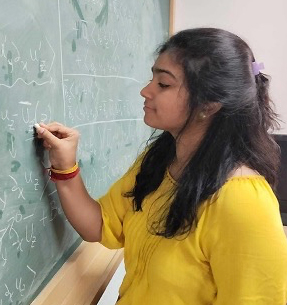
Bhuvaneshwari Kashi — Doctoral Student, Florida Atlantic University
Bhuvaneshwari Kashi is a doctoral student at Florida Atlantic University, focusing on black hole physics, numerical relativity, and gravitational waves from compact objects. She studies LISA’s sensitivity to higher-order modes (HOMs) in gravitational-wave (GW) signals from precessing massive black hole binaries (MBBHs), extreme mass-ratio inspirals (EMRIs), and intermediate mass-ratio inspirals (IMRIs). Her research focuses on understanding how HOMs affect detection and parameter estimation, with an additional interest in probing the population of intermediate-mass black holes (IMBHs) using future LISA observations. Alongside analysis work, she also develops visualization toolkits for GW HOMs and LISA sensitivity curves, which are available on her GitHub.
Outside of her work on LISA, she is actively involved in supporting women in STEM through the Supernova Foundation. She is a singer who performs on campus and enjoys creative pursuits such as photography and acrylic painting. Beyond that, she is a yoga practitioner and loves cooking and traveling in her free time. Check out Bhuvaneshwari's full story on #HumansOfLisa.
[Bhuvaneshwari Kashi, Image by Sristi Iyer]
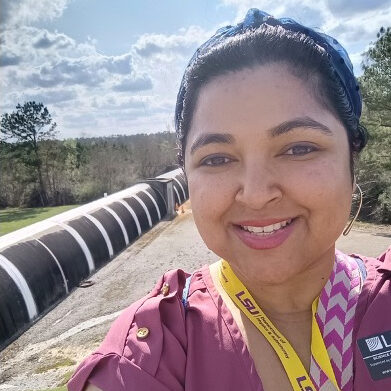
Debnandini Mukherjee — Research Fellow, Institute for Gravitational Wave Astronomy, University of Birmingham
Debnandini Mukherjee is a postdoc at the Institute for Gravitational Wave Astronomy, University of Birmingham, School of Physics and Astronomy.
She works on designing searches for massive black hole mergers that would be detectable by LISA. This includes pre and post merger searches. She is working on significantly developing the science ground segment for LISA and contributing to the 'global fit' of overlapping gravitational wave sources.
In her free time she listens to audio stories and podcasts about mysteries, unsolved cases, detective literature etc. She also paints and writes, both stories and poetry. She goes on short weekend trips to explore culture and history, does some amateur photography and make short films and documentaries. Check out Debnandini's full story on #HumansOfLisa.
[Debnandini Mukherjee]
LISA on social media - share your publications, news and profiles though LISA social media. Let us know of any news you would like to share or contribute to one of our existing formats: #LISAPapers: share news of your papers! [Online form on GoogleDocs…] #HumansOfLISA: share a humans of LISA profile! [Online form on GoogleDocs…]
You can find LISA on:
Publications and PhDs
PhD Thesis Spotlight
We highlight recent doctoral work within the LISA community.
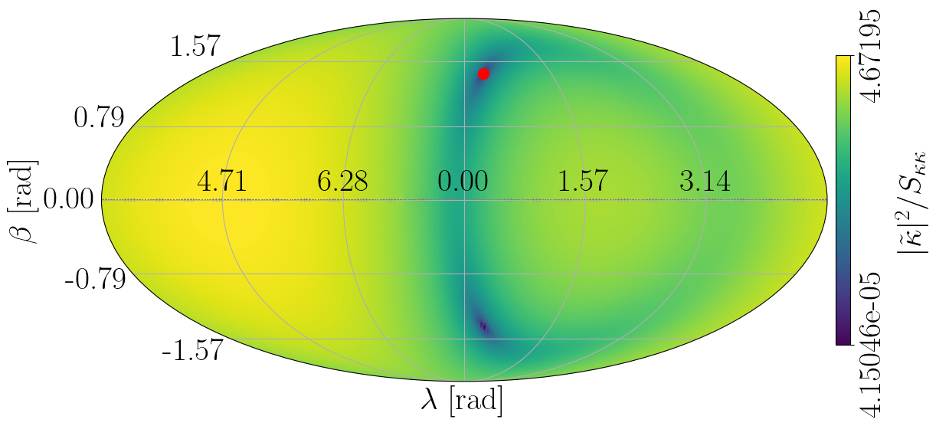
Raissa Costa Barroso, who completed a PhD at Université de Caen Normandie under the supervision of François Mauger and Yves Lemière, defended this November her thesis: “Agnostic Sky-Localization with Coronagraphic Time-Delay Interferometry for LISA: Application to Low-Latency Searches.”
Raissa’s thesis addresses the observational challenge of jointly detecting both gravitational and electromagnetic waves of certain cosmic events that require an early and precise sky-localization for gravitational wave sources observed by LISA. She develops and explores a model-agnostic technique based on coronagraphic time-delay interferometry.
An open‑access version of the thesis is available at: [theses.hal.science].
This work not only strengthens LISA’s multi-messenger science potential but also opens new pathways for rapid follow-up observations.
Image credit: Raissa Costa Barroso, from thesis and related paper
Authors: Raissa Costa Barroso, Yves Lemière, François Mauger, Quentin Baghi
How to advertise your PhD thesis
Consortium members who would like to promote their PhD thesis in the newsletter and on social media are invited to submit their details via the [Online form on GoogleDocs..], or email the editorial team with the thesis details and any relevant photos (please include captions and credits).
Jobs & Opportunities
The Laboratoire des 2 Infinis – Toulouse (L2IT)
is seeking candidates for the position of Research Software Engineer for Open Galaxy Catalogue Infrastructure in Gravitational-Wave Cosmology. The application deadline is on the 6th of March. Further details and application instructions can be found at: [cnrs.fr] pages. You can also contact: Gergely Dálya (gergely.dalya@l2it.in2p3.fr), Nicola Tamanini (nicola.tamanini@l2it.in2p3.fr), and Catherine Biscarat (catherine.biscarat@l2it.in2p3.fr) for any questions about the position.
IdEx Université Côte d’Azur — 2026 Young Researcher Excellence Fellowships
IdEx Université Côte d’Azur is opening the 2026 Young Researcher Excellence Fellowships to support the recruitment of outstanding postdoctoral researchers in its laboratories, reflecting the institution’s focus on excellence and international reach. This post‑doctoral fellowship runs for 24 months, provides funding for 12 contracts, and is open to all disciplines and themes.
Deadline for the submission of applications: March 6, 2026. Announcement of results: Mid-May, 2026 Deadline for taking up the position: February 1, 2027
Call for applications: Director of the European Gravitational Observatory (EGO).
Location: Cascina (Pisa), Italy; expected start January 1, 2027 with a six‑month overlap from mid‑2026 (actual start date and financial support negotiable). Term: three years, renewable up to a maximum of five; salary competitive and commensurate with experience. The Director is the legal representative of the EGO Consortium and provides overall strategic, scientific, and administrative leadership of the organization.
If you want to propose content for an upcoming issue, submit a LISA‑related comic strip, share feedback on the current issue, or join the editorial team, ...
Many thanks to Niels Roland for sharing this lovely piece of his artwork featuring one of our Consortium members, Thomas Tauris! More of his work (in Danish) can be found at this link: [eudor.dk..]
About
You received this email because you signed up for our newsletter, or you are a member of the LISA Consortium. If you no longer wish to receive the newsletter, you can unsubscribe using the specific link in the footer.
The LISA Newsletter is published by the LISA Consortium.
LISA Consortium Management Team: Niels Warburton, Jonathan Gair, Richard Brito, John Regan, Kelly Holley-Bockelmann, Susanne Milde, Shane Larson, Tamara Bogdanovic, Daniele Vetrugno, Gianluca Calcagni
LISA Consortium Council chairs: Richard Brito, John Regan
LISA Newsletter Team: Ana Caramete, Alice Paun, Hannah Middleton, Laurentiu-Ioan Caramete, Nina Kunert, Sascha Rieger, Panagiota Kolitsidou
Advisory and Editorial Review Team: Susanne Milde, Eleonora Castelli , Elias Vagenas, Hannah Middleton, Sascha Rieger
Website layout & technical support: Jan Scharein (WebDev Service AEI)
 2026 / MAR 03